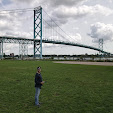

Welcome to home page for Gribblenation's series on the bridges, crossings, and structures of the lower Mississippi River! Here you will find links to information about the many bridges, ferries, and flood control structures located along the river between the Mississippi & Ohio Rivers confluence near Cairo, IL and the mouth of the Mississippi River at the Head of Passes Light near Venice, LA.
The bridges of the lower Mississippi River are a diverse collection of impressive engineering achievements. Many of these bridges were modern marvels at the time of their construction and most of them are still among the largest bridges of their respective types in the United States. In addition to the numerous monumental bridges in this region, there are multiple large-scale flood control structures and spillways that supplement the river's extensive levee system. These structures are strategically placed and help regulate the flow rate and level of the river during periods of high water and flooding. Each crossing or structure in this series has a unique story to tell and they all play a vital part in the transportation and flood control systems of the Mississippi Delta.
The directory below provides a full list of these points of interest along the river. They are listed here in order from north to south, or from upriver to downriver. Click on any of the listed landmarks below to view the full article. (Click on any of the photos on this home page to view a larger version.) In each article, you will find links at the bottom of the respective pages to further sources on each landmark, plus links back to this home page, as well as links to the adjacent landmarks along the river. These links have been included for your navigation purposes on this site and we hope you find them useful!
The bridges of the lower Mississippi River are a diverse collection of impressive engineering achievements. Many of these bridges were modern marvels at the time of their construction and most of them are still among the largest bridges of their respective types in the United States. In addition to the numerous monumental bridges in this region, there are multiple large-scale flood control structures and spillways that supplement the river's extensive levee system. These structures are strategically placed and help regulate the flow rate and level of the river during periods of high water and flooding. Each crossing or structure in this series has a unique story to tell and they all play a vital part in the transportation and flood control systems of the Mississippi Delta.
The directory below provides a full list of these points of interest along the river. They are listed here in order from north to south, or from upriver to downriver. Click on any of the listed landmarks below to view the full article. (Click on any of the photos on this home page to view a larger version.) In each article, you will find links at the bottom of the respective pages to further sources on each landmark, plus links back to this home page, as well as links to the adjacent landmarks along the river. These links have been included for your navigation purposes on this site and we hope you find them useful!
Bridges, Crossings, and Structures of the Lower Mississippi River
Dorena-Hickman Ferry (Hickman, KY)
Caruthersville Bridge (Caruthersville, MO)

Caruthersville Bridge (Caruthersville, MO)
The Mississippi River Bridges of Memphis, TN: An Introduction

The Mississippi River Bridges of Memphis, TN
Hernando de Soto Bridge (Memphis, TN)

Hernando de Soto Bridge (Memphis, TN)
Harahan Bridge/"Big River Crossing" (Memphis, TN)

Harahan Bridge/"Big River Crossing" (Memphis, TN)
Frisco Bridge (Memphis, TN)

Frisco Bridge (Memphis, TN)
Memphis & Arkansas Bridge (Memphis, TN)

Memphis & Arkansas Bridge (Memphis, TN)
Helena Bridge (Helena-West Helena, AR)

Helena Bridge (Helena-West Helena, AR)
Greenville Bridge (Greenville, MS)

Greenville Bridge (Greenville, MS)
The Mississippi River Bridges of Vicksburg, MS: An Introduction

The Mississippi River Bridges of Vicksburg, MS
Old Vicksburg Bridge (Vicksburg, MS)

Old Vicksburg Bridge (Vicksburg, MS)
Vicksburg Bridge (Vicksburg, MS)

Vicksburg Bridge (Vicksburg, MS)
Natchez-Vidalia Bridge (Natchez, MS)

Natchez-Vidalia Bridge (Natchez, MS)
Old River Lock & Control Structure (Lettsworth, LA)

Old River Control Structure (Lettsworth, LA)
Morganza Control Structure & Spillway (Morganza, LA)

Morganza Control Structure & Spillway (Morganza, LA)
John James Audubon Bridge (New Roads, LA)

John James Audubon Bridge (New Roads, LA)
Huey P. Long Bridge (Baton Rouge, LA)

Huey P. Long Bridge (Baton Rouge, LA)
Horace Wilkinson Bridge (Baton Rouge, LA)

Horace Wilkinson Bridge (Baton Rouge, LA)
Plaquemine Ferry (Plaquemine, LA)
Sunshine Bridge (Donaldsonville, LA)

Sunshine Bridge (Donaldsonville, LA)
Veterans Memorial Bridge (Gramercy, LA)

Veterans Memorial Bridge (Gramercy, LA)
Bonnet Carre Control Structure & Spillway (Norco, LA)

Bonnet Carré Control Structure & Spillway (Norco, LA)
Hale Boggs Memorial Bridge (Luling, LA)

Hale Boggs Memorial Bridge (Luling, LA)
Paper Highways: The Unbuilt New Orleans Bypass (Proposed I-410)

The Unbuilt New Orleans Bypass (Proposed I-410)
Huey P. Long Bridge (New Orleans, LA)

Huey P. Long Bridge (New Orleans, LA)
Crescent City Connection (New Orleans, LA)

Crescent City Connection (New Orleans, LA)
Canal Street-Algiers Point Ferry (New Orleans, LA)

Canal Street-Algiers Point Ferry (New Orleans, LA)
Chalmette-Lower Algiers Ferry (Chalmette, LA)

Chalmette-Lower Algiers Ferry (Chalmette, LA)
Belle Chasse-Scarsdale Ferry (Belle Chasse, LA)

Belle Chasse-Scarsdale Ferry (Belle Chasse, LA)
Pointe a la Hache Ferry (Pointe a la Hache, LA)

Pointe à la Hache Ferry (Pointe à la Hache, LA)
The "Bridges of the Mississippi River" webinar was presented on the "roadwaywiz" YouTube channel in May 2023 and features discussion on all of the bridges included in this series. It can be viewed at the link below:
The "Bridges of the Mississippi River" podcast episode was presented on the "Gribblenation Roadcast" on Spotify in April 2024 and features discussion on all of the bridges included in this series. It can be viewed and listened to at the link below:
[Insert Podcast Link Here]
Caruthersville Bridge (Caruthersville, MO)

Caruthersville Bridge (Caruthersville, MO)

The Mississippi River Bridges of Memphis, TN
Hernando de Soto Bridge (Memphis, TN)

Hernando de Soto Bridge (Memphis, TN)

Harahan Bridge/"Big River Crossing" (Memphis, TN)

Frisco Bridge (Memphis, TN)

Memphis & Arkansas Bridge (Memphis, TN)

Helena Bridge (Helena-West Helena, AR)
Greenville Bridge (Greenville, MS)

Greenville Bridge (Greenville, MS)
The Mississippi River Bridges of Vicksburg, MS: An Introduction

The Mississippi River Bridges of Vicksburg, MS
Old Vicksburg Bridge (Vicksburg, MS)

Old Vicksburg Bridge (Vicksburg, MS)
Vicksburg Bridge (Vicksburg, MS)

Vicksburg Bridge (Vicksburg, MS)
Natchez-Vidalia Bridge (Natchez, MS)

Natchez-Vidalia Bridge (Natchez, MS)
Old River Lock & Control Structure (Lettsworth, LA)

Old River Control Structure (Lettsworth, LA)
Morganza Control Structure & Spillway (Morganza, LA)

Morganza Control Structure & Spillway (Morganza, LA)
John James Audubon Bridge (New Roads, LA)

John James Audubon Bridge (New Roads, LA)
Huey P. Long Bridge (Baton Rouge, LA)

Huey P. Long Bridge (Baton Rouge, LA)
Horace Wilkinson Bridge (Baton Rouge, LA)

Horace Wilkinson Bridge (Baton Rouge, LA)
Plaquemine Ferry (Plaquemine, LA)
Sunshine Bridge (Donaldsonville, LA)

Sunshine Bridge (Donaldsonville, LA)
Veterans Memorial Bridge (Gramercy, LA)

Veterans Memorial Bridge (Gramercy, LA)
Bonnet Carre Control Structure & Spillway (Norco, LA)

Bonnet Carré Control Structure & Spillway (Norco, LA)
Hale Boggs Memorial Bridge (Luling, LA)

Hale Boggs Memorial Bridge (Luling, LA)
Paper Highways: The Unbuilt New Orleans Bypass (Proposed I-410)

The Unbuilt New Orleans Bypass (Proposed I-410)
Huey P. Long Bridge (New Orleans, LA)

Huey P. Long Bridge (New Orleans, LA)
Crescent City Connection (New Orleans, LA)

Crescent City Connection (New Orleans, LA)
Canal Street-Algiers Point Ferry (New Orleans, LA)

Canal Street-Algiers Point Ferry (New Orleans, LA)
Chalmette-Lower Algiers Ferry (Chalmette, LA)

Chalmette-Lower Algiers Ferry (Chalmette, LA)
Belle Chasse-Scarsdale Ferry (Belle Chasse, LA)

Belle Chasse-Scarsdale Ferry (Belle Chasse, LA)
Pointe a la Hache Ferry (Pointe a la Hache, LA)

Pointe à la Hache Ferry (Pointe à la Hache, LA)
The "Bridges of the Mississippi River" webinar was presented on the "roadwaywiz" YouTube channel in May 2023 and features discussion on all of the bridges included in this series. It can be viewed at the link below:
The "Bridges of the Mississippi River" podcast episode was presented on the "Gribblenation Roadcast" on Spotify in April 2024 and features discussion on all of the bridges included in this series. It can be viewed and listened to at the link below:
[Insert Podcast Link Here]
Comments