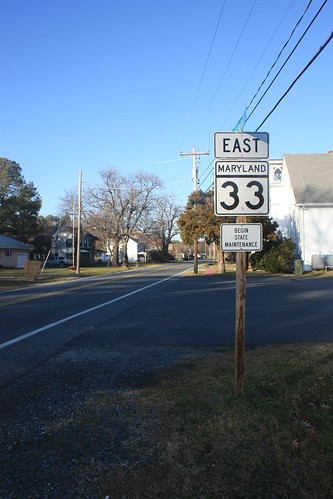
MD 33: Easton to Tilghman Island

Maryland 33 Begins

The weekend after I was in Waldorf, Maryland.  The following weekend, I returned to Maryland.  This time to the Eastern Shore and for a Curling Bonspiel at the Chesapeake Curling Club in Easton.  During some downtime between matches, I took a ride out on MD 33 and also MD 579 to check out some of the islands and peninsulas that reach into the Chesapeake.

For the entire Flickr Set - head here.

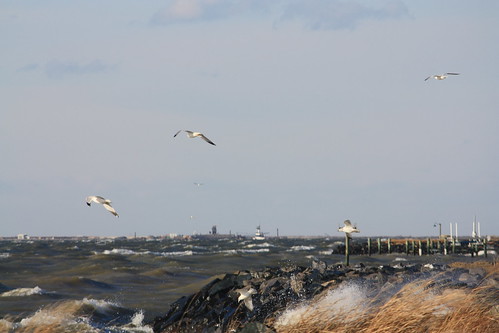
It was an amazingly blustery day - and with the passage of a cold front the night before - it made for some chilly conditions especially when you are trying to take photos from an exposed position on the Chesapeake Bay!

The wind was strong enough that the sea gulls had trouble flying into the headwind!
035

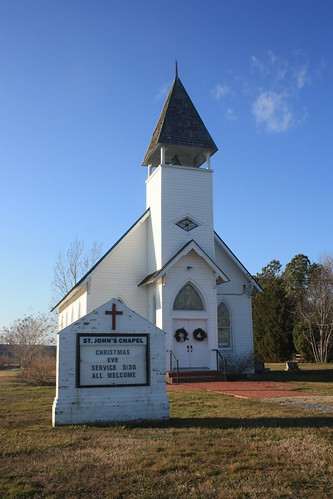
If there was one thing I will remember about Maryland 33 - and Maryland 579 as well - were all of the small rural Methodist chapels.  A lot of the chapels only have service a few times a year - with many of them still advertising their Christmas service - three weeks later.
053

A lot of these rural chapels only have services a few times a year - many of these churches will share one pastor - limiting their ability to have a weekly service.

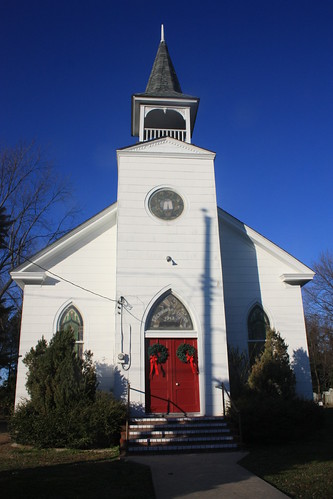
A great example is this church in the town of Sherwood - which is located on an oxbow section of old MD 33.
058

Sherwood United Methodist Church - built in 1912.  The church's next service isn't until March 11th.  The last service was a Christmas Eve Vigil.

Finally, a trip down MD 579 and in Bozman - a beautiful Methodist Church.
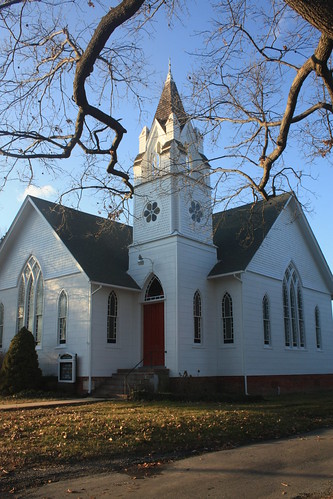
Bozman United Methodist Church

As you can see, the theme of this roadtrip ended up being churches.  Unfortunately, I didn't have time to walk around the charming towns of St. Michael's or Easton.  However, this is just another example of there's plenty to find and discover when your off the main highways and interstates.


Comments

Popular posts from this blog

The Tale of Tollhouse Road, western California State Route 168 and failed Piute Pass Highway

Western California State Route 168 is entirely located in Fresno County and is linked historically to the Tollhouse Road corridor.   Tollhouse Road is one of the oldest highways in the Sierra Nevada range of Fresno County. The corridor presently begins in at Clovis Avenue in downtown Clovis and extends northeast to Huntington Lake. In 1866 the Woods Brothers established mining claims on Pine Ridge. In 1867 Fresno County would grant the brothers a toll franchise to construct a roadway to the desirable logging areas atop Pine Ridge and near Dinkey Creek. The Woods would establish a tollhouse at the start of their franchise road and lumber mill. The lumber mill attracted settlers which led to the establishment of the mountain town of Tollhouse. Fresno County would purchase the Tollhouse Road in 1878 and make it a public highway. The county would remove the tolls and incorporate the corridor into the existing county road network. Prior to the establishment of Clovis in 1...

Old Dunlap Road (former California State Route 180 in Yokuts Valley)

When California State Route 180 was commissioned in August 1934 the alignment in took in Sierra Nevada range was very different than from today.  The original highway alignment from Squaw Valley (now Yokuts Valley) to east Grant Grove (then part of General Grant National Park) originally followed what is now Ruth Hill Road, Dunlap Road, Pinehurst Road (modern California State Route 245), Dark Canyon Road (partially now Forest Road 14S45).  After funding fell through for the planned Kings Canyon Road the was corridor eventually picked up as a 30-mile-long cooperative project between the Division of Highways and Federal Government.  Much of current alignment of California State Route 180 bypassing Squaw Valley (now Yokuts Valley) and Dunlap was complete by 1941.  The post-1941 alignment of California State Route 180 in Squaw Valley was shifted onto what was once Dunlap Road in Squaw Valley.  This alignment itself was later bypassed by modern California State Route...

New River Gorge National Park & Preserve - Thurmond

New River Gorge National Park and Preserve is best known for whitewater rafting and other forms of adventure tourism.  Yet, found in the hollows and isolated valleys are quiet farms and former coal mining towns.  Well off the beaten path and isolated from much of its surroundings, Thurmond provides a unique view into Central West Virginia's industrial past. Thurmond began as a railroad town in the late 1800s.  Sparked by the arrival of the Chesapeake & Ohio Railroad and the local coal industry, Thurmond quickly grew into a sizeable transportation and coal center.  When it incorporated as a town in 1903, Thurmond was a full-fledged community - home to two banks, two hotels, and many other services and stores. A CSX freight train passes the old coaling tower in Thurmond.  It was here that many steam locomotives would refill and refuel. Thurmond was home to a C&O railyard which serviced the numerous steam engines passing through the narrow valley.  Thu...