Calaveritas Road


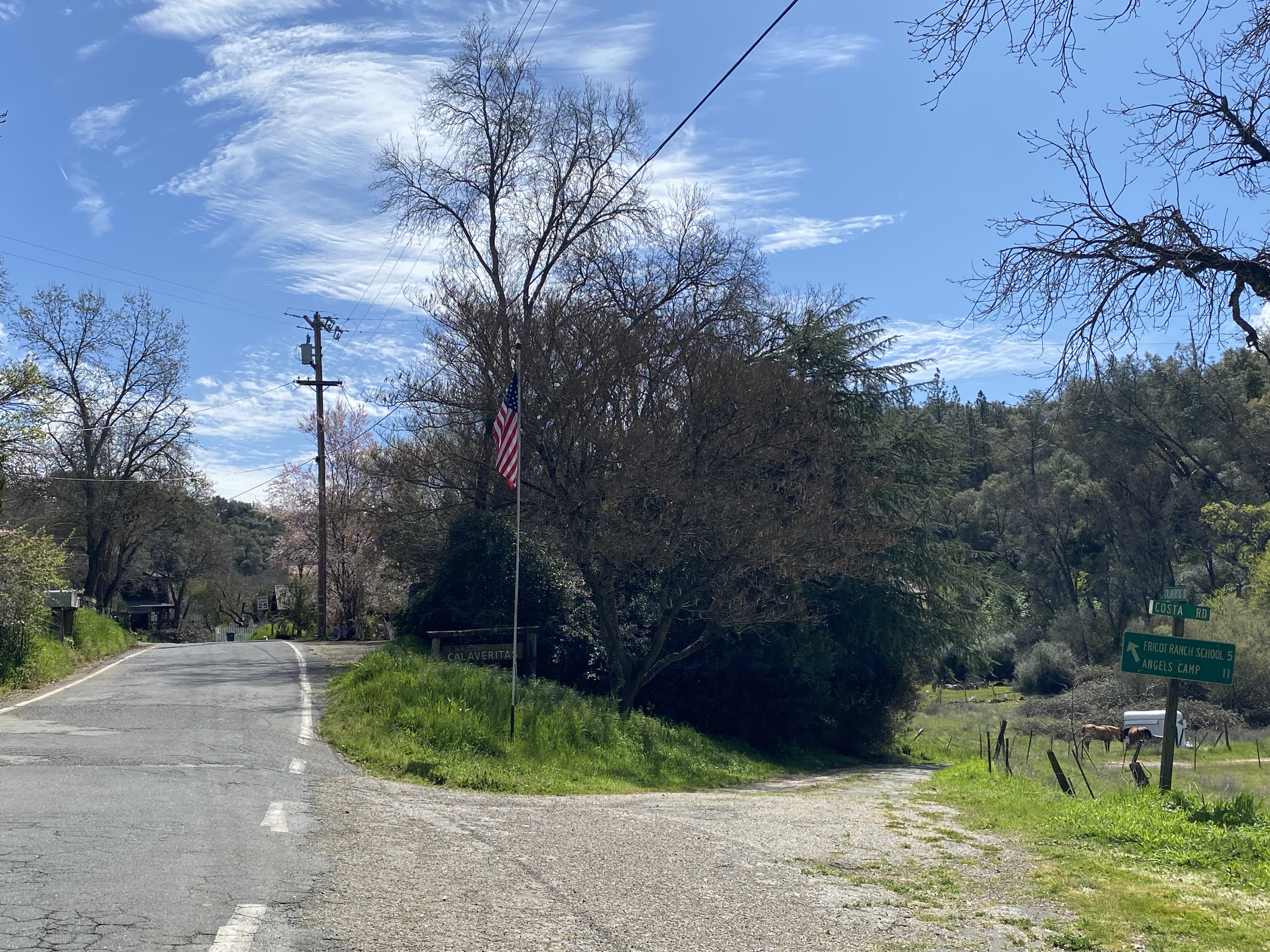
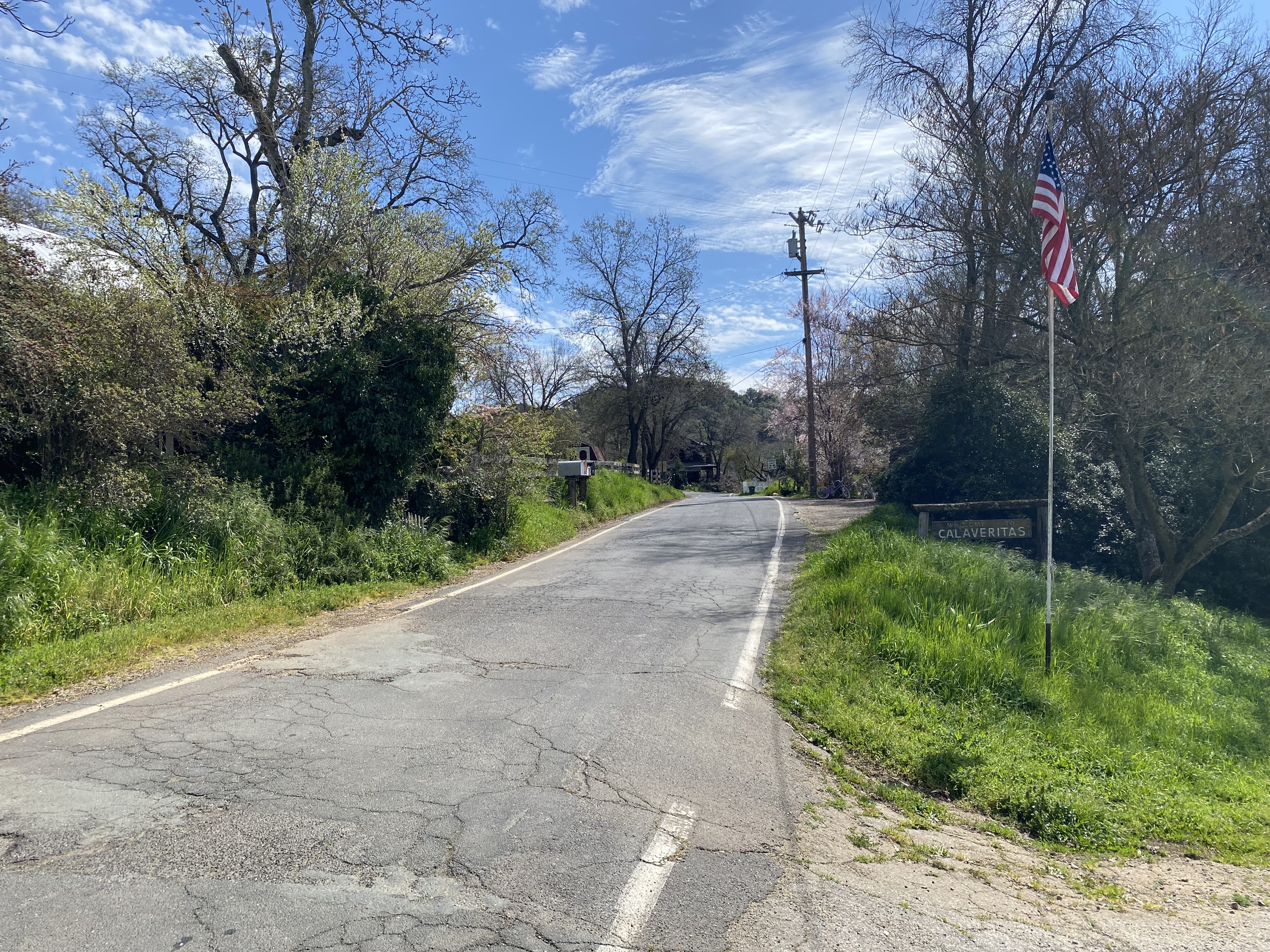
Calaveritas Road is a five-mile mountain highway in the Sierra Nevada Mountains of Calaveras County, California.  Calaveritas Road connects from Mountain Ranch Road in San Andreas southeast to Dogtown Road by way of the Gold Rush community of Calaveritas.  Calaveritas was founded in 1849 by Mexican miner and is the location where the ruins of the Costa Store can be found.  The Calaveritas Creek Bridge can be found on Calaveritas Road and is the oldest example of a top chord Warren pony truss in California having been constructed during 1928.  


Part 1; the history of Calaveritas Road

Calaveritas Road is named after the small community of the same name located southwest of San Andreas.  Calaveritas was founded by Mexican miners in 1849. The community is thought to have peaked with a population of about 800 by 1857. Much of Calaveritas would burn in a fire during 1858 which would lead to it declining. For a time, the community as known as "Upper Calaveritas" to differentiate it from a nearby "Lower Calaveritas."

Calaveritas Road can be seen connecting San Andreas to the vicinity of Indian Creek via Calaveritas on the 1914 C.F. Weber Map of Calaveras County.  


The Calaveritas Creek Bridge is located just south of the namesake community along Calaveritas Road.  The structure is a top chord Warren pony truss which was constructed during 1928.  The structure was found to be oldest remaining such design left in California during a study in 2015 (Calaveras Enterprise).  The structure was added to the National Register of Historic Places during August of said year.  


Part 2; a drive on Calaveritas Road

Calaveritas Road begins in San Andreas at Mountain Ranch Road.  


As southbound Calaveritas Road begins traffic is warned of the 18,000-23,000lb weight limit four miles ahead at the Calaveritas Creek Bridge.


Calaveritas Road continues south as a two-lane road and drops to a single lane approaching the Cement Plant Road trestle.  


The Cement Plant Road trestle was built over Calaveritas Road in the late 1920s by Calaveras Cement.  Calaveras Cement incorporated in 1925 and was based out of a plant located on Pool Station Road.  The company is most well-known for supplying cement to the construction site of Pardee Dam.  The company would construct a 5.5-mile private road from their plant to quarries located east of Calaveritas. Calaveras Cement would be sold in 1959 and again in 1979.  The company would be shuttered in 1983 due to being unable to compete with foreign cement prices and a high cost to modernize their plant.  Despite the shuttering of Calaveras Cement the road to the quarry remains private and inaccessible to the public. 


Calaveritas Road passes through the town site of Calaveritas.  The remains of the Costa Store constructed in 1852 harkens back to the era of the Gold Rush.  The Costa Store operated in the community into the early twentieth century.  A State Registered Landmark plaque can also be found in the community.


Calaveritas Road continues south over the Calaveritas Creek Bridge. 


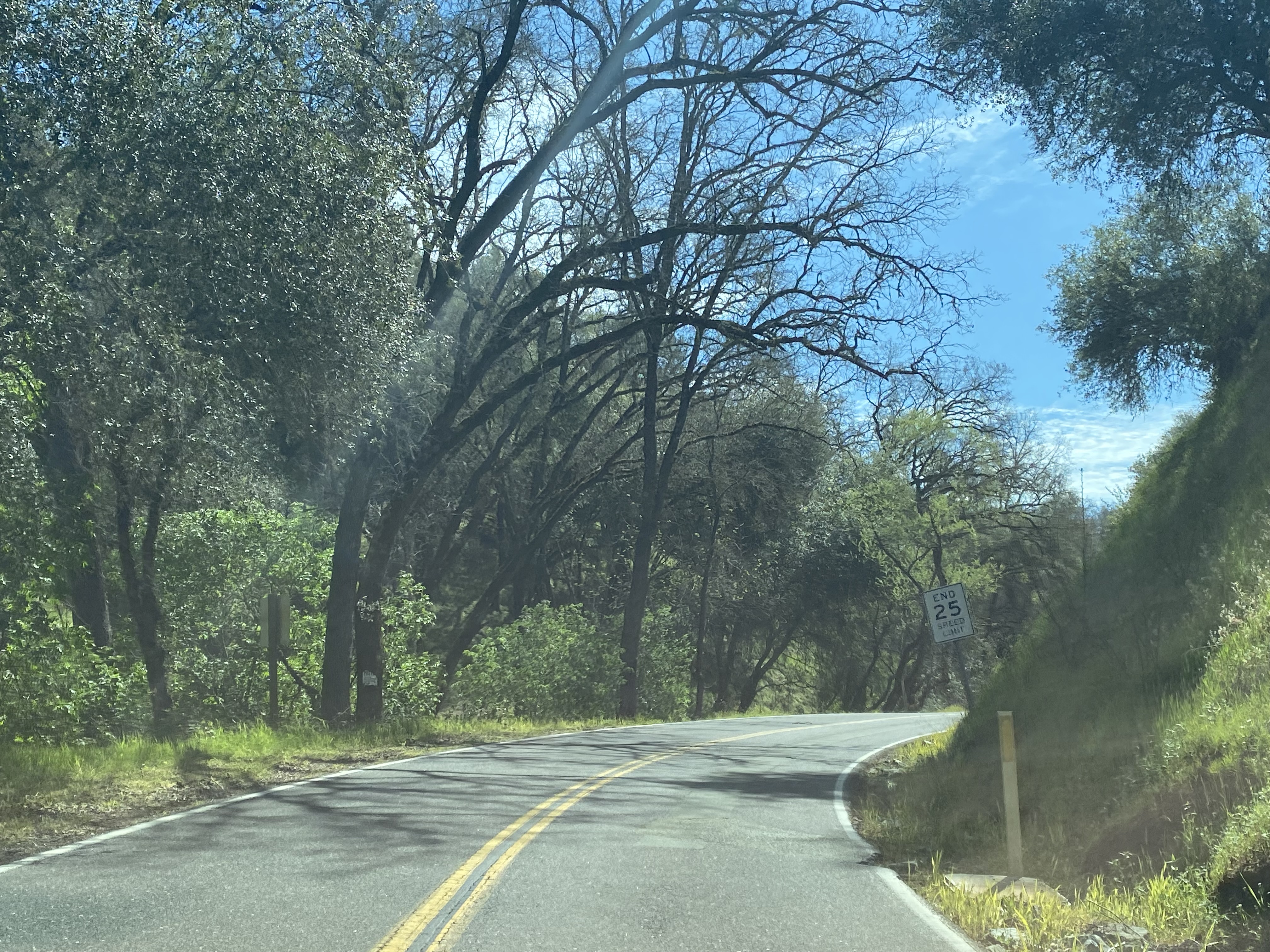
Calaveritas Road climbs from Calaveritas Creek and terminates at Dogtown Road.  


Comments

Popular posts from this blog

Petroleum Club Road (former California State Route 33 and US Route 399 past the Lakeview Gusher)

Petroleum Club Road is an approximately 5.3-mile rural highway located in the Sunset Oil Field of western Kern County.  This corridor was constructed as a frontage road of the Sunset Railroad and would be the site of the Lakeview Gusher in 1910.  Petroleum Club Road was the original alignment of California State Route 33 and US Route 399 between 1934-1938.  In 1938 the West Side Highway was constructed west of Lakeview Gusher and still serves as the current alignment of California State Route 33.   Part 1; the history of Petroleum Club Road Petroleum Club Road is the original highway which linked the oil communities of Maricopa and Taft.  Both cities were developed around the early boom of the Sunset Oil Field.  The early Sunset Oil Field can be seen centered along Cienega Canyon Road southwest of Buena Vista Lake in Township 11 North, Range 23 West on the 1898 Kern County Surveyors map .  In 1901 Post Office Service would be established at the Su...

Did Caltrans just kill the G26 cutout US Route shields?

The US Route System was formally created by the American Association of State Highway Officials during November 1926.  Through the history of the system the only state to which has elected to maintain cutout US Route shields has been California.  The G26 series cutout US Route shields have become a favorite in the road enthusiast hobby and are generally considered to be much more visually pleasing than the standard Federal Highway Administration variant.  However, the G26 shield series appears to have been killed off on January 18, 2026, when Caltrans updated their Manual of Uniform Traffic Control Devices.  This blog will examine the history of the US Route shield specifications in California and what is happening with the 2026 changes.  The blog cover photo is facing towards the terminus of California State Route 136 and at a G26-2 specification US Route 395 shield.  In the background Mount Whitney can be seen in the Sierra Nevada range.   ...

Kuakini Highway (former Hawaii Route 11 in Kailua-Kona)

Kuakini Highway east of Palani Road in Kailua-Kona is the original alignment of Hawaii Route 11.  The highway upon being commissioned in 1955 began at the Palani Road (then Hawaii Route 19) and followed Kuakini Highway southeast towards Holualoa.  Hawaii Route 11 was shifted to an extension of Queen Kaahumanu Highway during the late 1970s which bypassed downtown Kailua-Kona.   This page is part of the Gribblenation Hawaii Roads series.  A compellation of all Hawaii-related media from both Gribblenation and RoadwayWiz can be found by clicking  here .  Part 1; the history of Hawaii Route 11 and Kuakini Highway in Kailua-Kona Hawaii Route 11 is part of Mamalahoa Highway (the Hawaii Belt Road) and is the longest Hawaiian State Route at 121.97 miles.  The highway begins at the mutual junction of Hawaii Route 19 and Hawaii Route 190 in Kailua-Kona.  From Kailua-Kona the routing of Hawaii Route 11 crosses the volcanic landscapes of southern side of ...