Horace Wilkinson Bridge (Baton Rouge, LA)

Standing tall across from downtown Baton Rouge, the Horace Wilkinson Bridge carries Interstate 10 across the lower Mississippi River between West Baton Rouge and East Baton Rouge Parishes. Unusually, the bridge is actually named for three separate people; three generations of Horace Wilkinsons who served in the Louisiana State Legislature over a combined period of 54 years.

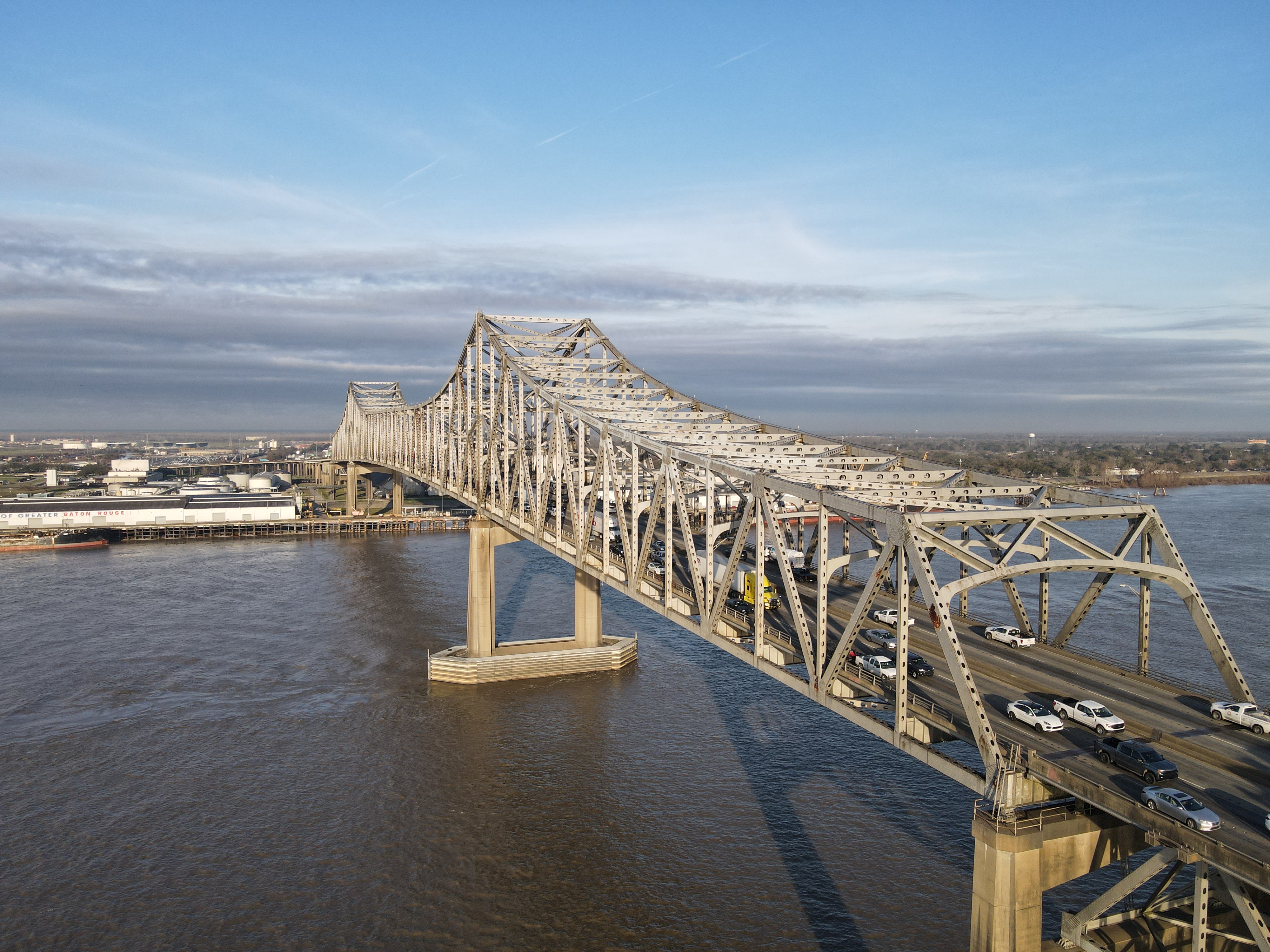
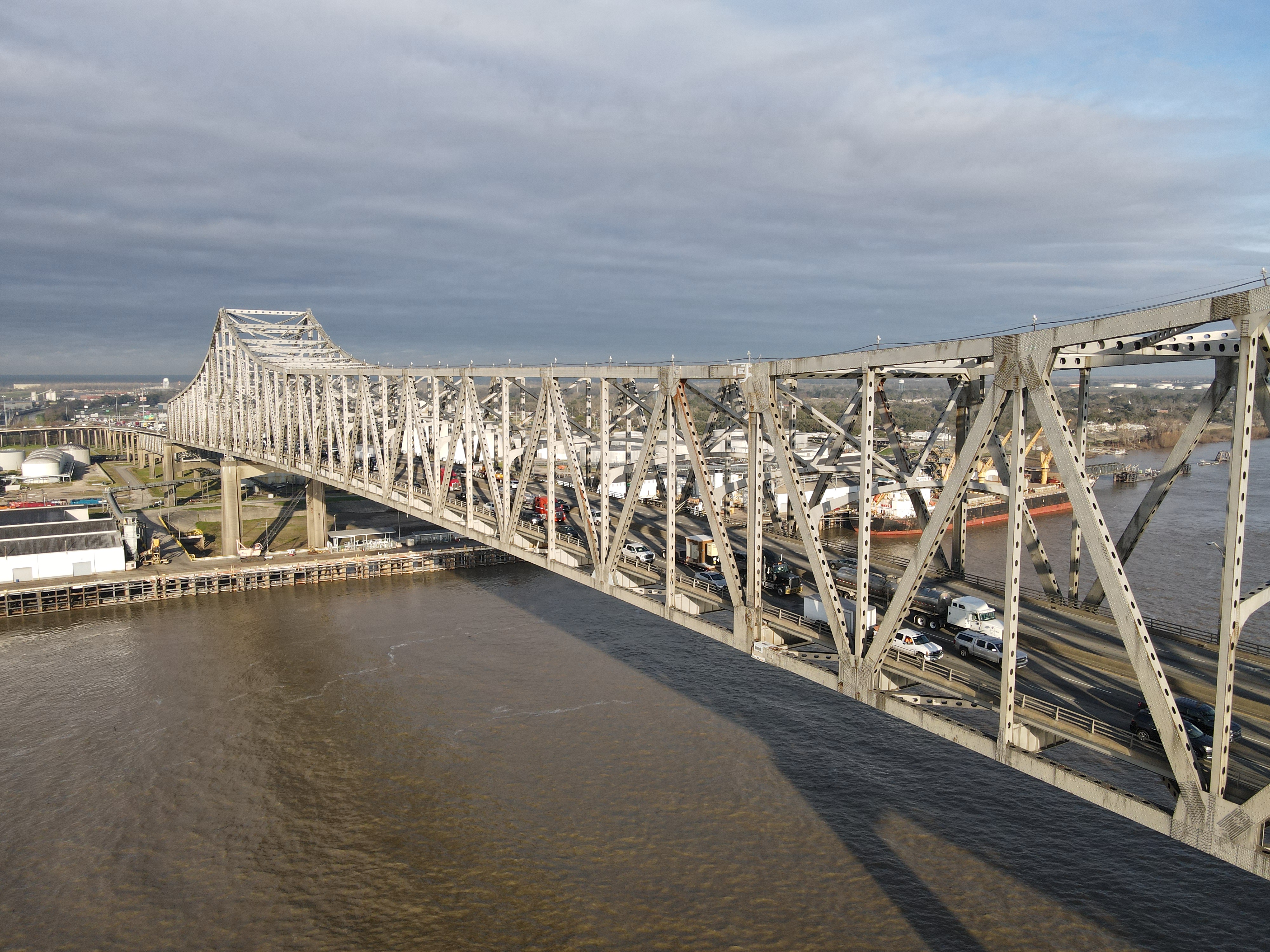
Constructed in the 1960s and opened to traffic in 1968, this is one of the largest steel bridges on the lower Mississippi. It’s also the tallest bridge across the Mississippi, with its roadway reaching 175 ft at the center span. Baton Rouge is the northernmost city on the river where deep-water, ocean-going vessels can operate. As a result, this bridge is the northernmost bridge on the river of truly gigantic proportions. Altogether, the bridge is nearly 2 ½ miles long and its massive truss superstructure is 4,550 ft long with a center main truss span of 1,235 ft.

The Horace Wilkinson Bridge is one of the largest and busiest bridges on the lower Mississippi River. As time has gone on, it's become clear that this bridge is not capable of handling the ever-increasing cross-river traffic demands of the region.

As part of the busy I-10 corridor across southern Louisiana, this bridge sees some of the heaviest traffic of any bridge on the lower Mississippi. This problem is compounded by the fact that for a metropolitan area the size of Baton Rouge (the state’s capital and 2nd largest metro area), cross-river traffic is handled by only two bridges, the other being the much older Huey P. Long Bridge a short distance to the north. The high amount of local traffic mixing with the already significant long-distance traffic on the interstate makes for a bridge that is always prone to congestion at all hours of the day. In addition, the bridge’s roadway lacks full shoulders, a common safety feature on most interstate highway bridges. The roadway does carry six lanes for traffic, yet two of these lanes (one per direction) are reserved for local entering/exiting traffic at the interchanges on each bridge approach. 

Altogether, this is a bridge that has needed supplementation for many years and the state of Louisiana is not in a position at this time to offer any significant solutions to the traffic bottleneck that the bridge and its approaches represent. The state has instead chosen to pursue bridge projects in other areas of the lower Mississippi basin that have had negligible impacts on traffic congestion, whether in the Baton Rouge area or elsewhere, and the state has generally neglected the needs of its capital region by overlooking the traffic demands generated in this particular stretch of the river. In this author’s opinion, southern Louisiana would be well-served to consider the construction of a third bridge in Baton Rouge, whether as a parallel span for the existing Wilkinson Bridge, or on an alignment nearby that would enable much of the long distance traffic on the interstate to bypass Baton Rouge. The two bridges that serve this area are not getting any younger and it may be time to take their age and lessening effectiveness seriously so that a real effort may emerge to modernize the region’s transportation infrastructure with the goal that it will be compatible with the demands of the 21st Century. 

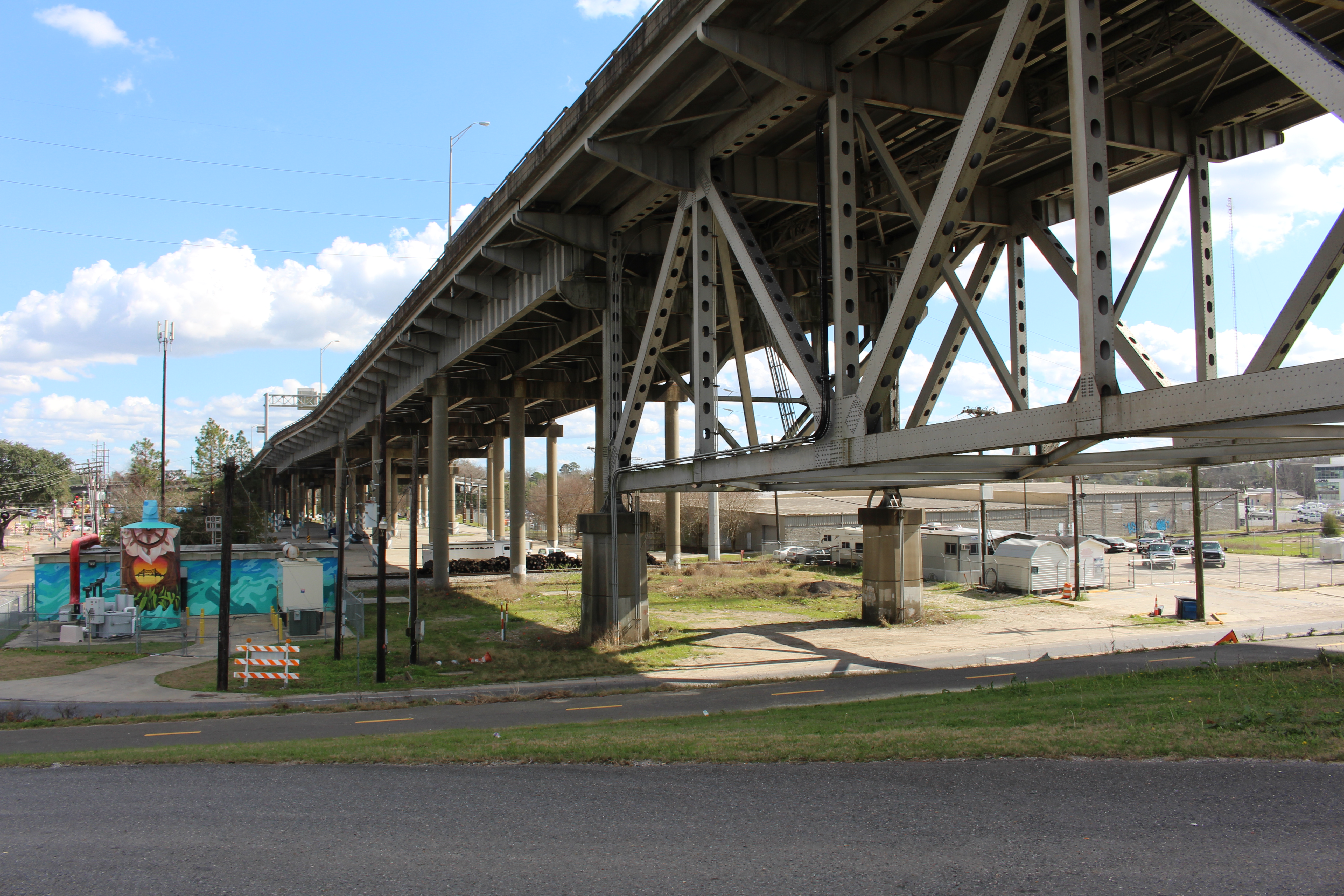
The following photos from my February 2023 visit to the Horace Wilkinson Bridge showcase the eastbound crossing of the bridge from West Baton Rouge to East Baton Rouge. Click on each photo to see a larger version.

The following photos from my February 2023 visit to the Horace Wilkinson Bridge showcase the westbound crossing of the bridge from East Baton Rouge to West Baton Rouge. Click on each photo to see a larger version.

The following photos from my January 2017 visit to the Horace Wilkinson Bridge showcase various vantage points from along the Mississippi Riverfront near downtown Baton Rouge. Click on each photo to see a larger version.

The following aerial photos from my February 2023 visit to the Horace Wilkinson Bridge showcase various views of the bridge and its surroundings along the Mississippi River. Click on each photo to see a larger version.

Dashcam video of the eastbound drive over the Horace Wilkinson Bridge was filmed in February 2023 for the 'roadwaywiz' YouTube channel and is available for viewing at the link below:

Dashcam video of the westbound drive over the Horace Wilkinson Bridge was filmed in February 2023 for the 'roadwaywiz' YouTube channel and is available for viewing at the link below:

The Horace Wilkinson Bridge was featured in the "Bridges of the Lower Mississippi River" webinar on the 'roadwaywiz' YouTube channel, beginning at the 1:50:20 mark:


How To Get There:

Further Reading:
Horace Wilkinson Bridge by John Weeks
Horace Wilkinson Bridge at historicbridges.org

Bridges, Crossings, and Structures of the Lower Mississippi River
Next Crossing upriver: Huey P. Long Bridge (Baton Rouge, LA)
Next Crossing downriver: Plaquemine Ferry (Plaquemine, LA)
Next Bridge downriver: Sunshine Bridge (Donaldsonville, LA)
Return to the Bridges of the Lower Mississippi River Home Page
__________________________________________________

Comments

Popular posts from this blog

Did Caltrans just kill the G26 cutout US Route shields?

The US Route System was formally created by the American Association of State Highway Officials during November 1926.  Through the history of the system the only state to which has elected to maintain cutout US Route shields has been California.  The G26 series cutout US Route shields have become a favorite in the road enthusiast hobby and are generally considered to be much more visually pleasing than the standard Federal Highway Administration variant.  However, the G26 shield series appears to have been killed off on January 18, 2026, when Caltrans updated their Manual of Uniform Traffic Control Devices.  This blog will examine the history of the US Route shield specifications in California and what is happening with the 2026 changes.  The blog cover photo is facing towards the terminus of California State Route 136 and at a G26-2 specification US Route 395 shield.  In the background Mount Whitney can be seen in the Sierra Nevada range.   ...

May 2023 Ontario Trip (Part 3 of 3)

  Over the years, I have made plenty of trips to Ontario, crisscrossing the southern, central and eastern parts of the province. Living in Upstate New York, it's pretty easy to visit our neighbor to the north, or is that our neighbor to the west? Ottawa is one of my favorite cities to visit anywhere in the world, plus I've discovered the charm of Kingston, the waterfalls of Hamilton (which is on the same Niagara Escarpment that brings us Niagara Falls), the sheer beauty of the Bruce Peninsula, and more. But I hadn't explored much of Cottage Country. So I decided to change that, and what better time to go than over Memorial Day weekend, when the daylight is long and I have an extra day to explore. On the third and final day of my trip, I started in Huntsville and made my way through Muskoka District and Haliburton County, passing by many lakes along the way. I stopped in towns such as Dorset, Haliburton and Bancroft before making a beeline down to Belleville and then over th...

Ghost Town Tuesday; Nichols, FL

A couple years ago I spent a lot of spare time exploring phosphate mining ghost towns in the Bone Valley of Polk County, Florida.  One ghost town in particular called Nichols on Polk County Route 676 west of Mulberry caught my eye due to a relative lack of documentation on ghosttowns.com. Nichols was created in 1905 during the early phosphate mining boom in the Bone Valley region.  For the time Nichols was unusual since it had company housing in the Nichols Mine site and private residences outside the gate.  Nichols is only about two miles west of Mulberry which probably made it a somewhat reasonable commute even by the wonky standards of the early 20th Century.  Most of the Bone Valley region was relatively remote which made commuting or homesteading impractical which is why there are so many ghost towns in the area.  The company housing section of Nichols was phased out and abandoned by 1950. The Nichols town site is largely abandoned and could "possibl...