Hawaii Route 92

Hawaii Route 92 is a 9.3 mile State Highway located on the Island of O'ahu.  Hawaii Route 92 connects Joint Base Pearl Harbor-Hickam east through downtown Honolulu via Nimitz Highway to Ala Moana Boulevard in Waikiki.  Hawaii Route 92 is notable due to much of the highway being located underneath the Queen Liliuokalani Freeway portion of Interstate H-1.  The Ala Moana Boulevard segment of Hawaii Route 92 was built largely over right of way which was originally set aside for proposed Interstate H-4.  


This page is part of the Gribblenation Hawaii Roads series.  A compellation of all Hawaii-related media from both Gribblenation and RoadwayWiz can be found by clicking here


Part 1; the history of Hawaii Route 92

Prior to the Statehood the first signed highways within Hawaii Territory came into existence during World War II.   During World War II the territory of Hawaii saw an influx of military activity following the attack on Pearl Harbor on December 7th, 1941.  Numerous Military Routes and early Hawaii Routes were signed through the Hawaiian Territory to aid military personnel in navigating the islands.  Military Highways were assigned US Route style shields whereas lesser highways were assigned an early variation of what is now the Hawaii Route Spade.  

A 1946 Army Map of the Island of O'ahu shows modern Nimitz Highway as part of Hawaii Route 110 and Military Route 1 from Hickam Army Airfield to Honolulu.  A full version of the 1946 Army Map of O'ahu can be seen on hawaiihighways.com here


Circa 1955 following the conclusion of World War II the United States Bureau of Public Roads renumbered the Hawaii Route System.  The 1955 Hawaii Route Renumbering saw most of the conventions utilized by the current Hawaii State Route System established.  Primary Hawaii Routes were given two digit numbers whereas Secondary Hawaii Routes were given three digit numbers.  The Hawaii Routes were assigned in sequence for what Island/County they were located on coupled with what Federal Aid Program number they were tied to.  In the case of O'ahu the Island was assigned numbers in the range of 60-99.  In the case of Nimitz Highway it was assigned as Hawaii Route 92.

Hawaii Route 92 on Nimitz Highway can be seen constructed to Hawaii Route 61 at Nuuanu Boulevard in downtown Honolulu on the 1959 Gousha Map of Hawaii.  Ala Moana Boulevard is shown with no direct connection to Nimitz Highway.  


Notably the 1959 Gousha Map of Hawaii shows Hawaii Route 92/Nimitz Highway is being aligned alongside Hawaii Route 90/Kamehameha Highway from the outskirts of Hickam Air Force Base east to downtown Honolulu.  Hawaii Route 90 split from Hawaii Route 92 onto Dillingham Boulevard.  


Nimitz Highway is named in honor of U.S. Navy Fleet Admiral Chester W. Nimitz.  Chester W. Nimitz is well known for the role he played as Commander in Chief of the Pacific Fleet during World War II.  


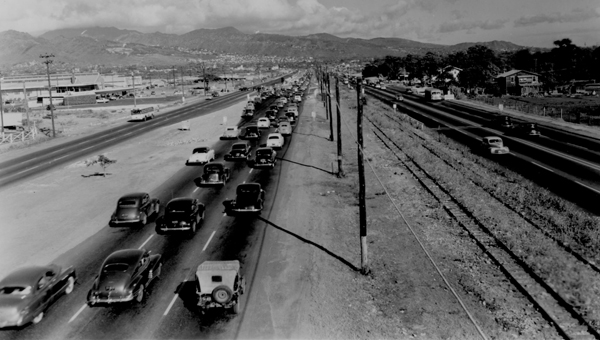
Below Nimitz Highway (on the left as the two-lane highway) and Kamehameha Highway can be seen running alongside each other west of downtown Honolulu in a Hawaii Department of Transportation photo from 1951 (courtesy hawaiihighways.com).


According hawaiihighways.com what became Nimitz Highway had been planned as part of the cross-town Makai Arterial which would connect Honolulu to Hickam Army Airfield.  The Makai Arterial was dropped during 1948 and the Mauka Arterial (future Intestate H-1) through Honolulu began to be developed instead.  

On August 21st, 1959 Hawaii became the 50th State which saw it's profile rise significantly.  The Interstate System in Hawaii was authorized as part of the 1960 Statehood Act.  The 1960 Statehood Act authorized Interstates H-1, H-2 and H-3 on the Island of O'ahu.  Hawaii Route 92 and Hawaii Route 90 from the outskirts of Hickam Airforce Base east to downtown Honolulu was selected to become part of the Queen Liliuokalani Freeway segment of Interstate H-1.  Ultimately the corridor of Hawaii Route 90 would be deleted which left Hawaii Route 92/Nimitz Highway planned as being part of a surface highway underneath Interstate H-1/Queen Liliuokalani Freeway.

On August 24th, 1968 the Federal-Aid Highway Act of 1968 was signed into law by President Lyndon Johnson.  The Federal-Aid Highway Act of 1968 added an additional 1,500 miles to the Interstate Highway System which was to be funded through 1972.  The Federal-Aid Highway Act of 1968 was the impetus for numerous Interstate proposals which would include the concept of Interstate H-4.  Interstate H-4 was presented as a proposed highway by way of a October 1968 Hawaii of Transportation Document titled; Proposed Route H-4.

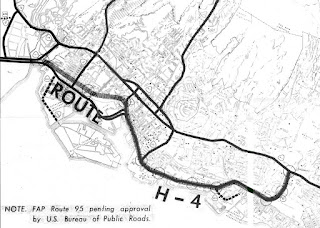
Proposed Route H-4 Section II describes proposed alignment of Interstate H-4.  Interstate H-4 is stated to have a planned length of 6.5 miles originating from the planned Keehi Interchange west of downtown Honolulu.  Interstate H-4 is described as being aligned between Nimitz Highway and Dillingham Boulevard eastward towards Ala Moana Boulevard.  Interstate H-4 is described as being planned to follow Ala Moana Boulevard eastward to Waikiki at the Ala Wai Canal.  Interstate H-4 is described as being planned to skirt Waikiki eastward via the Ala Wai Canal and looping back to Interstate H-1 via Manoa-Palolo Drainage Canal at the Kapiolani Interchange.  


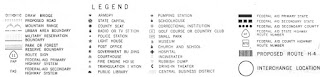
An attached map shows the proposed alignment of Interstate H-4.  Interstate H-4 is shown to be categorized under Federal Aid Primary 92 which functionally made it an extension of Hawaii Route 92.  The proposed alignment of Interstate H-4 is shown to follow what is now Hawaii Route 92 from the eastern end of Nimitz Highway via an extended Ala Moana Boulevard to Ala Wai Canal.  A state highway conversion of Ala Moana Boulevard in Waikiki is shown as being planned as Hawaii Route 920.  Ala Moana Boulevard in Waikiki would ultimately become the eastern terminus of Hawaii Route 92 at Kalakaua Boulevard.  Notably the planned interchange structures on proposed Interstate H-4 are shown as circles.  


An attached Hawaii Department of Transportation Memorandum For Record cites the Interstate H-4 proposal being presented on October 18th, 1968.  The corridor of Interstate H-4 is ultimately cited as not being recommended.  A cost estimate of $600,000,000 million dollars to construct Interstate H-4 is cited as being cost prohibitive.  $400,000,000 dollars of the estimate is cited being earmarked for a largely underground tube alignment of Interstate H-4 (a tube alignment is not described in Proposed Route H-4).  The corridor of the Makai Arterial is cited as having merit if pursued via an alternative which ultimately led to Hawaii Route 92 being extended to Waikiki via Ala Moana Boulevard.  


Interstate H-1 on the Queen Liliuokalani Freeway from Exit 5 (HI 76/HI 750) to its western terminus opened during 1967.  The Queen Liliuokalani segment of Interstate H-1 was completed east to Hawaii Route 78 (future Interstate H-201) by 1971.  The completion of the Queen Liliuokalani Freeway saw the advent of the modern alignment of the Hawaii Route 92/Nimitz Highway underneath much of Interstate H-1.  The Queen Liliuokalani segment of Interstate H-1 was gradually extended east of Hawaii Route 78 to the Lunalilo Freeway segment of Interstate H-1 culminating in the completion of the Intestate during May of 1986. 


Part 2; Roadwaywiz on Hawaii Route 92

During May of 2019 Dan Murphy featured Hawaii Route 92 on the Roadwaywiz Youtube channel.  Part 1 below features Hawaii Route 92 beginning at Kalakaua Avenue in Waikiki westward on Ala Moana Boulevard towards Nimitz Highway.  Notably reassurance signage on much of Hawaii Route 92/Ala Moana Boulevard notes the highway directly accesses Daniel K. Inouye International Airport.  


Part 2 features Hawaii Route 92 transitioning onto Nimitz Highway in downtown Honolulu and following westward underneath Interstate H-1/Queen Liliuokalani Freeway.

Part 3 features Hawaii Route 92 on Nimitz Highway underneath Interstate H-1/Queen Liliuokalani Freeway westward past Daniel K. Inouye International Airport towards the Hawaii Route 99/Kamehameha Highway junction towards Joint Base Pearl Harbor-Hickam.


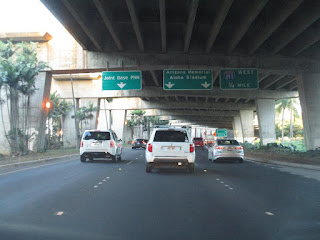
Below numerous photos from westbound Hawaii Route 92 can be observed.


Part 3; a drive on eastbound Hawaii Route 92

Below Hawaii Route 92 begins on Nimitz Highway departing Joint Base Hickam-Pearl Harbor and splits underneath the Queen Liliuokalani Freeway segment of Interstate H-1 at the Interstate H-1/Hawaii Route 99 junction.  


Hawaii Route 92 eastbound follows Nimitz Highway underneath Interstate H-1 past Daniel K. Inouye International Airport.  


Hawaii Route 92 follows Nimitz Highway eastward and splits from underneath the Queen Liliuokalani freeway segment of Interstate H-1 towards downtown Honolulu.  


Hawaii Route 92 follows Nimitz Highway eastbound and transitions onto Ala Moana Boulevard.


Hawaii Route 92 follows Ala Moana Boulevard eastward and crosses Ala Wai Canal into Waikiki.  Upon entering Waikiki Hawaii Route 92 follows Ala Moana Boulevard to a terminus at Kalakaua Avenue near Fort Derussy Park.  


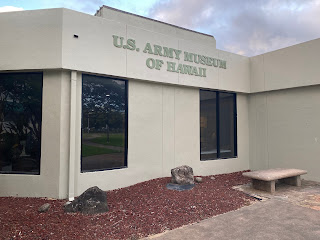
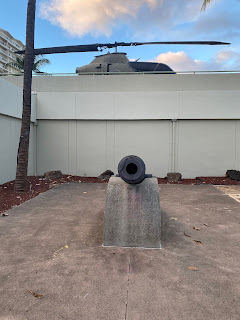
The Fort DeRussy Military Reservation in Waikiki is under the jurisdiction of the U.S. Army but functions more as a park during modern times.  Fort DeRussy was originally constructed during 1911 along with Battery Randolph.  Battery Randolph now houses the U.S. Army Museum of Hawaii.


From Fort DeRussy Beach one can see how much Diamond Head Crater towers of Waikiki.  


Comments

Popular posts from this blog

Did Caltrans just kill the G26 cutout US Route shields?

The US Route System was formally created by the American Association of State Highway Officials during November 1926.  Through the history of the system the only state to which has elected to maintain cutout US Route shields has been California.  The G26 series cutout US Route shields have become a favorite in the road enthusiast hobby and are generally considered to be much more visually pleasing than the standard Federal Highway Administration variant.  However, the G26 shield series appears to have been killed off on January 18, 2026, when Caltrans updated their Manual of Uniform Traffic Control Devices.  This blog will examine the history of the US Route shield specifications in California and what is happening with the 2026 changes.  The blog cover photo is facing towards the terminus of California State Route 136 and at a G26-2 specification US Route 395 shield.  In the background Mount Whitney can be seen in the Sierra Nevada range.   ...

May 2023 Ontario Trip (Part 3 of 3)

  Over the years, I have made plenty of trips to Ontario, crisscrossing the southern, central and eastern parts of the province. Living in Upstate New York, it's pretty easy to visit our neighbor to the north, or is that our neighbor to the west? Ottawa is one of my favorite cities to visit anywhere in the world, plus I've discovered the charm of Kingston, the waterfalls of Hamilton (which is on the same Niagara Escarpment that brings us Niagara Falls), the sheer beauty of the Bruce Peninsula, and more. But I hadn't explored much of Cottage Country. So I decided to change that, and what better time to go than over Memorial Day weekend, when the daylight is long and I have an extra day to explore. On the third and final day of my trip, I started in Huntsville and made my way through Muskoka District and Haliburton County, passing by many lakes along the way. I stopped in towns such as Dorset, Haliburton and Bancroft before making a beeline down to Belleville and then over th...

Ghost Town Tuesday; Nichols, FL

A couple years ago I spent a lot of spare time exploring phosphate mining ghost towns in the Bone Valley of Polk County, Florida.  One ghost town in particular called Nichols on Polk County Route 676 west of Mulberry caught my eye due to a relative lack of documentation on ghosttowns.com. Nichols was created in 1905 during the early phosphate mining boom in the Bone Valley region.  For the time Nichols was unusual since it had company housing in the Nichols Mine site and private residences outside the gate.  Nichols is only about two miles west of Mulberry which probably made it a somewhat reasonable commute even by the wonky standards of the early 20th Century.  Most of the Bone Valley region was relatively remote which made commuting or homesteading impractical which is why there are so many ghost towns in the area.  The company housing section of Nichols was phased out and abandoned by 1950. The Nichols town site is largely abandoned and could "possibl...