
Recently on Gribblenation, we helped break the news
that the New River National River and its surrounding lands are to be
designated as a National Park & Preserve. Given this exciting news, I
thought it would be appropriate to revisit this same area that I had the
fortune of exploring for the first time back in July 2020 and show you some of
my favorite locations and amenities encountered along the way.
For an engineer like me, the centerpiece landmark of
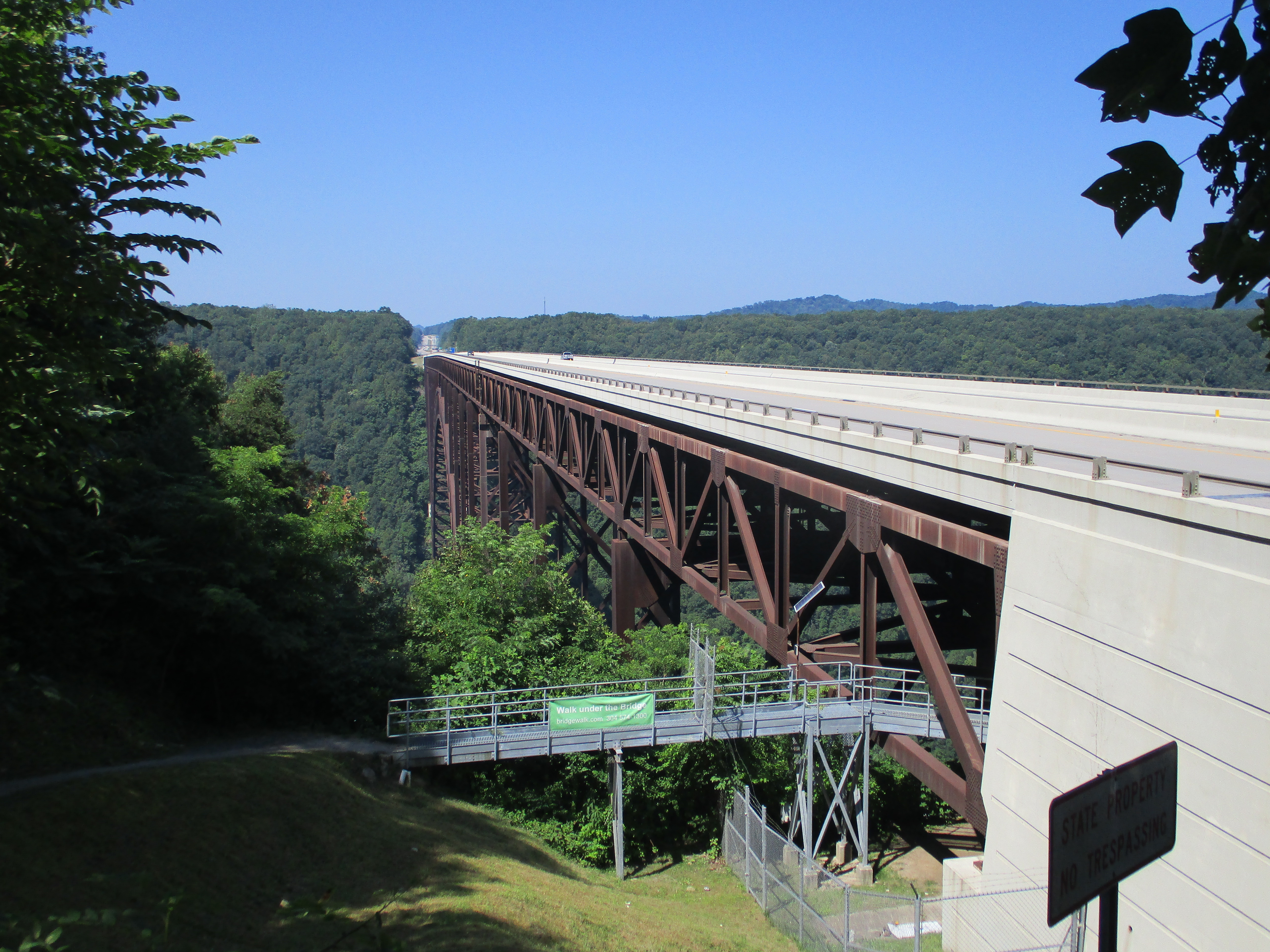
the New River region is the New River Gorge Bridge, a massive steel arch bridge
located along US Route 19 near Fayetteville, WV. The bridge was completed in
1977 as the world’s largest bridge of its type, a title it held for 25 years
after its completion. It is additionally the centerpiece link in ADHS Corridor
L, connecting Interstates 64/77 in Beckley with Interstate 79 near Sutton, and
it remains among the great engineering achievements of the 20th
Century for both West Virginia and America in general. The bridge’s birthday is
celebrated by the locals with the annual “Bridge Day” celebration held on the
third Saturday of October. The event attracts folks nationwide and is known for
its live demonstrations of rappelling, ascending, and BASE jumping. The eastern
bridge landing area is home to a visitor center and a popular overlook point
(the location where the picture above was taken). If you’re feeling a bit
daring and are unable to attend the “Bridge Day” festivities, you can also sign
up for the “Bridge Walk” experience, offered by the private “Bridge Walk, LLC”
company. The Bridge Walk gives visitors the opportunity to walk the length of
the bridge’s maintenance catwalk beneath the roadway, over 800 feet above the
canyon floor.


Above: Views of the Bridge from various overlook points along the narrow, winding Fayette Station Road. The bridge's steel arch spans 1,700 ft and its roadway stands 876 ft above the canyon floor, making it among the tallest bridges in the United States.
For a bit of a change of pace, drivers can also navigate their way along the Old Road across New River Gorge. Signed today as Fayette Station Road and Fayette County Route 82, the old road is a single lane wide (open to traffic in the south/westbound direction) and navigates the steep slopes of the gorge with the help of tight hairpin turns and switchbacks. At the bottom of the gorge, the old road crosses the New River on a single-lane truss bridge known as the Fayette Station Bridge. The bridge was built in 1889 and then closed upon completion of the New River Gorge Bridge in 1977. After 20 years of abandonment, the bridge and Fayette Station Road were reopened to small vehicle traffic in 1997 and this bridge at the bottom of the gorge offers a spectacular view of the newer arch bridge as it soars over 800 feet above.




It’s not just all about roads and bridges when you’re
here - there are other non-road related locations folks can check out while
they’re in the area. In July 2020, the above-mentioned Visitor Center was
closed due to COVID-19, so I sought out other alternative ways to take advantage
of what the area has to offer. One of my favorite activities during this visit
was to hike the Long Point Trail, which is a 2.9 mile out & back from a
trailhead located just south of Fayetteville village. It’s a fairly stress-free
hike that takes about 90 minutes round-trip at a brisk pace and the views at
the overlook at trail’s end are some of the finest in the entire New River
region, spectacular even. It’s one of those simple ways to do something
outdoors while still maintaining social distance in the era of COVID-19, while
also taking in the man-made & natural scenery & beauty of New River.


Above: Select views of the Long Point Trail near Fayetteville, including the "Money Shots" of the Bridge at the Trail's End Overlook
Comments