Scenic Road (Carmel-by-the-Sea)


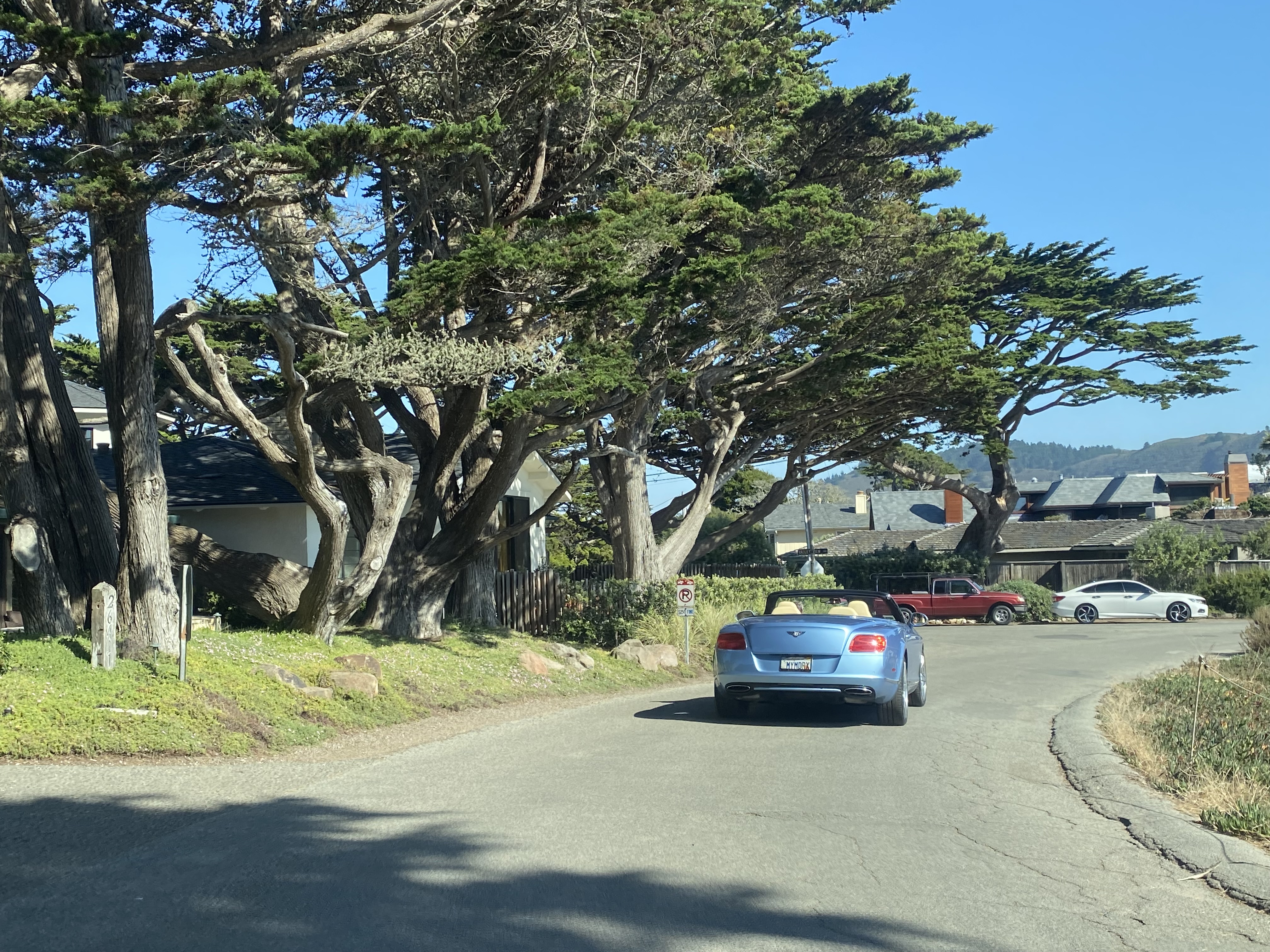
Scenic Road is a 1.5-mile street located in and around the city of Carmel-by-the-Sea, California.  The corridor was developed as part of a 1902 subdivision which formed the basis for the modern Carmel town plot.  The routing of Scenic Road follows Carmel Bay from Ocean Avenue southward Mara Beach by the Carmel River.  The street offers numerous coastal views, is free to use and aligned for southbound-only traffic.  


Part 1; the history of Scenic Road

Prior to European contact Carmel Valley was home to numerous local tribes.  The area was first explored by Europeans during a 1542 Spanish expedition led Juan Rodriguez Cabrillo.  The Cabrillo expedition sailed along the coastline north through Big Sur, Carmel Valley and Monterey Peninsula, but made no attempt to land.  

In 1602 Sebastián Vizcaíno discovered Carmel Valley at the behest of Spain and named the river running through it Rio Carmel.  The name is thought to be an honorific reference to three Carmelite friar which were part of the expedition.  The Spanish would not attempt to colonize the area until 1770 when the Catholic Mission San Carlos Borromeo de Carmelo was established.  

Following the Mexican-American War the lands around Carmel Bay became part of the American state of California.  Numerous settlers would buy up plots of land on Carmel Bay and Carmel Valley from the 1850s through the 1880s.  During 1889 Monterey property developer Santiago J. Duckworth filed a subdivision map with Monterey County.  The subdivision plot was simply known as "Carmel" and the area would even receive erratic on/off Postal Service.  

During 1902, James Franklin Devendorf and Frank Hubbard Powers, would submit another subdivision map with Monterey County which established much of the modern town plot of Carmel.  The plot included what is now "Scenic Road" which ran along the waterfront of Carmel Bay.  The community would incorporate as the city of "Carmel-by-the-Sea" on October 31, 1916.  The name "Carmel-by-the-Sea" was a reference to the early publicity campaign to spur interest in the area.  

Scenic Road appears in detail on the 1938 Thomas Brothers Map of Carmel-By-The-Sea


Part 2; a drive on Scenic Road

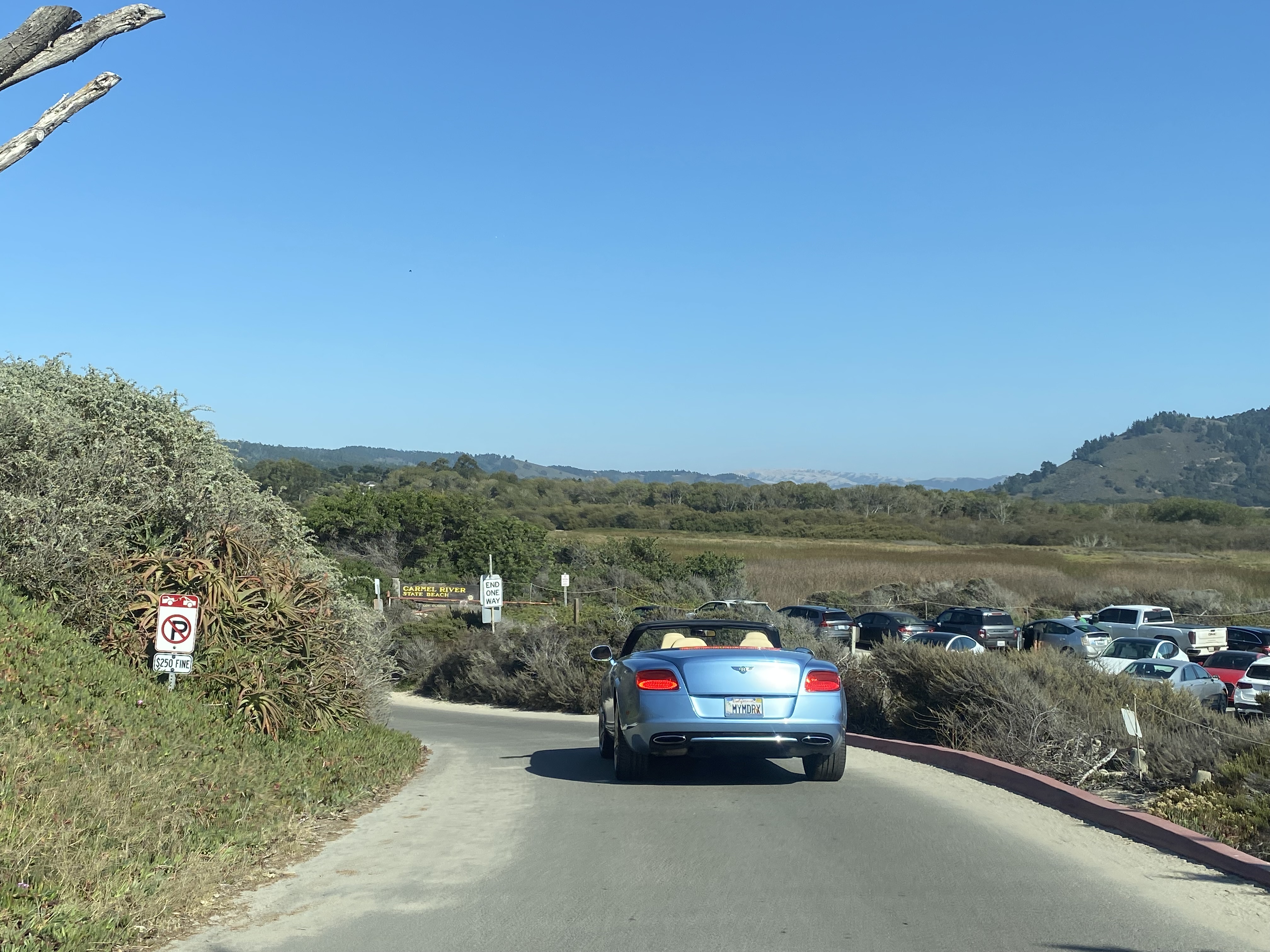
Scenic Road begins from the western terminus of Ocean Avenue at the parking lot for Carmel Sunset Beach.  Traffic is forced to loop through the parking lot to reach the one-way only southbound Scenic Road.  


Scenic Road follows the course of Carmel Bay southward and dips inland to a terminus at the parking lot for Mara Beach.  The corridor passes numerous beaches and higher end homes built along the coastline.  At Mara Beach traffic transitions to the two-way Carmelo Street heading northbound.  


Comments

Popular posts from this blog

Did Caltrans just kill the G26 cutout US Route shields?

The US Route System was formally created by the American Association of State Highway Officials during November 1926.  Through the history of the system the only state to which has elected to maintain cutout US Route shields has been California.  The G26 series cutout US Route shields have become a favorite in the road enthusiast hobby and are generally considered to be much more visually pleasing than the standard Federal Highway Administration variant.  However, the G26 shield series appears to have been killed off on January 18, 2026, when Caltrans updated their Manual of Uniform Traffic Control Devices.  This blog will examine the history of the US Route shield specifications in California and what is happening with the 2026 changes.  The blog cover photo is facing towards the terminus of California State Route 136 and at a G26-2 specification US Route 395 shield.  In the background Mount Whitney can be seen in the Sierra Nevada range.   ...

May 2023 Ontario Trip (Part 3 of 3)

  Over the years, I have made plenty of trips to Ontario, crisscrossing the southern, central and eastern parts of the province. Living in Upstate New York, it's pretty easy to visit our neighbor to the north, or is that our neighbor to the west? Ottawa is one of my favorite cities to visit anywhere in the world, plus I've discovered the charm of Kingston, the waterfalls of Hamilton (which is on the same Niagara Escarpment that brings us Niagara Falls), the sheer beauty of the Bruce Peninsula, and more. But I hadn't explored much of Cottage Country. So I decided to change that, and what better time to go than over Memorial Day weekend, when the daylight is long and I have an extra day to explore. On the third and final day of my trip, I started in Huntsville and made my way through Muskoka District and Haliburton County, passing by many lakes along the way. I stopped in towns such as Dorset, Haliburton and Bancroft before making a beeline down to Belleville and then over th...

Ghost Town Tuesday; Nichols, FL

A couple years ago I spent a lot of spare time exploring phosphate mining ghost towns in the Bone Valley of Polk County, Florida.  One ghost town in particular called Nichols on Polk County Route 676 west of Mulberry caught my eye due to a relative lack of documentation on ghosttowns.com. Nichols was created in 1905 during the early phosphate mining boom in the Bone Valley region.  For the time Nichols was unusual since it had company housing in the Nichols Mine site and private residences outside the gate.  Nichols is only about two miles west of Mulberry which probably made it a somewhat reasonable commute even by the wonky standards of the early 20th Century.  Most of the Bone Valley region was relatively remote which made commuting or homesteading impractical which is why there are so many ghost towns in the area.  The company housing section of Nichols was phased out and abandoned by 1950. The Nichols town site is largely abandoned and could "possibl...