
Bridge Monday; the Roosevelt Lake Bridge and Roosevelt Dam

Back in the early 2010s I frequently visited Gila County Arizona.  Often my travel took me up Arizona State Route 88 (usually for fun) and Arizona State Route 188.  The junction of AZ 88 and AZ 188 holds what was two significant bridging structures of Roosevelt Lake; the Roosevelt Dam and Roosevelt Lake Arch Bridge.


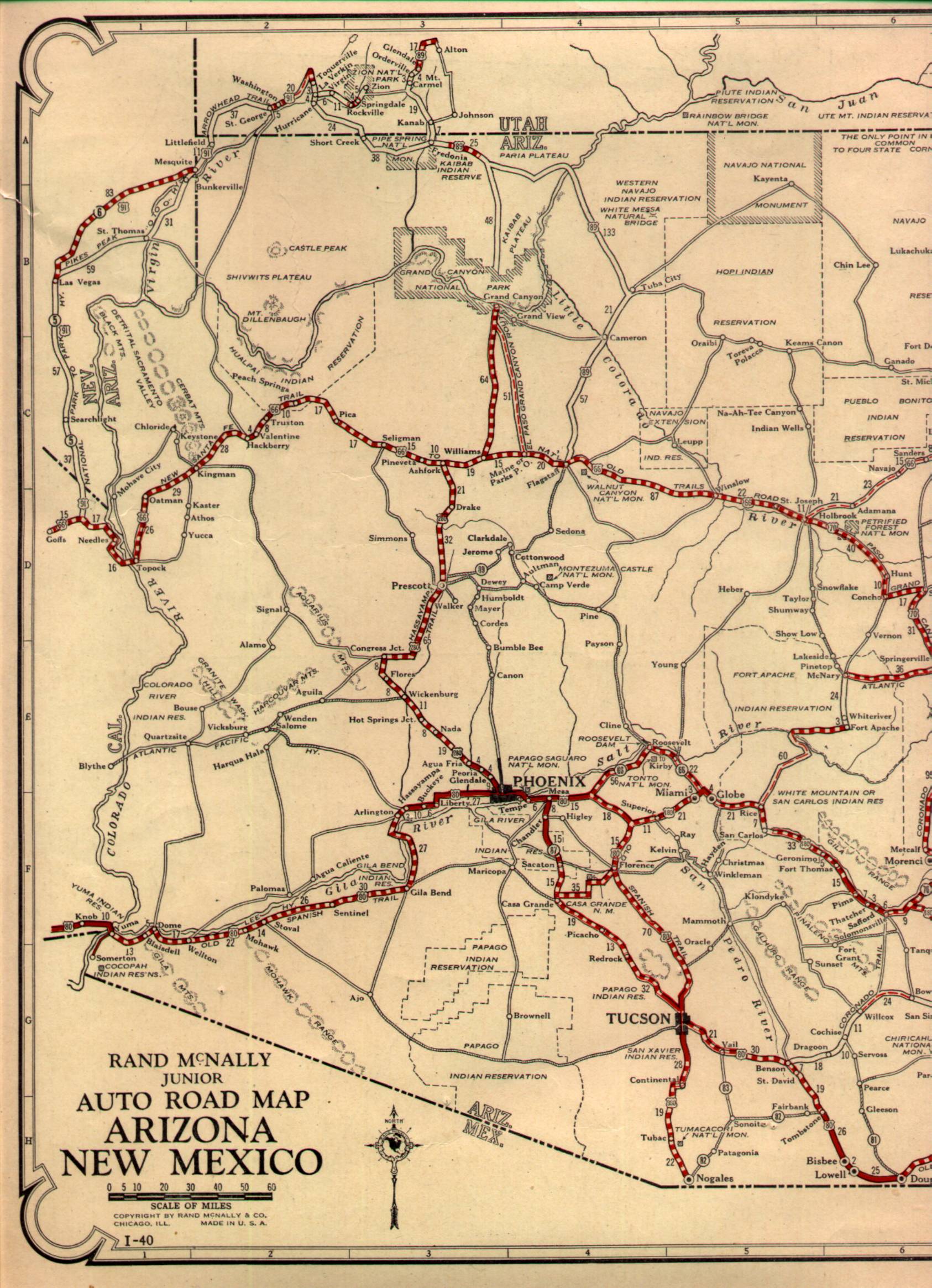
AZ 88 is one of the oldest State Highways in Arizona dating back to 1927.  While the highway was originally intended to be signed as AZ 66 the designation of AZ 88 was ultimately chosen due to US 66 being assigned over what was intended to be US 60 in Arizona.  As originally signed AZ 88 stretched from US Route 80 in Apache Junction east to the first US 180 in Globe.  By 1927 Roosevelt Dam was long completed since 1911 as it was the signature structure of the Salt River Project.  Roosevelt Dam was used as a bridging structure from AZ 88 north to the road to Payson.  This 1927 highway map of Arizona shows the location of Roosevelt Dam on the initial alignment of AZ 88.

Construction of Roosevelt Dam began along the Salt River in Gila County by 1903, as stated above the structure was completed by 1911.  Roosevelt Dam and the Salt River Project were part of the 1902 Reclamation Act which paved the way for later more well known public works projects such as the Hoover Dam.  Roosevelt Dam as originally completed was a completely masonry dam and was the largest of it's type at the time.  


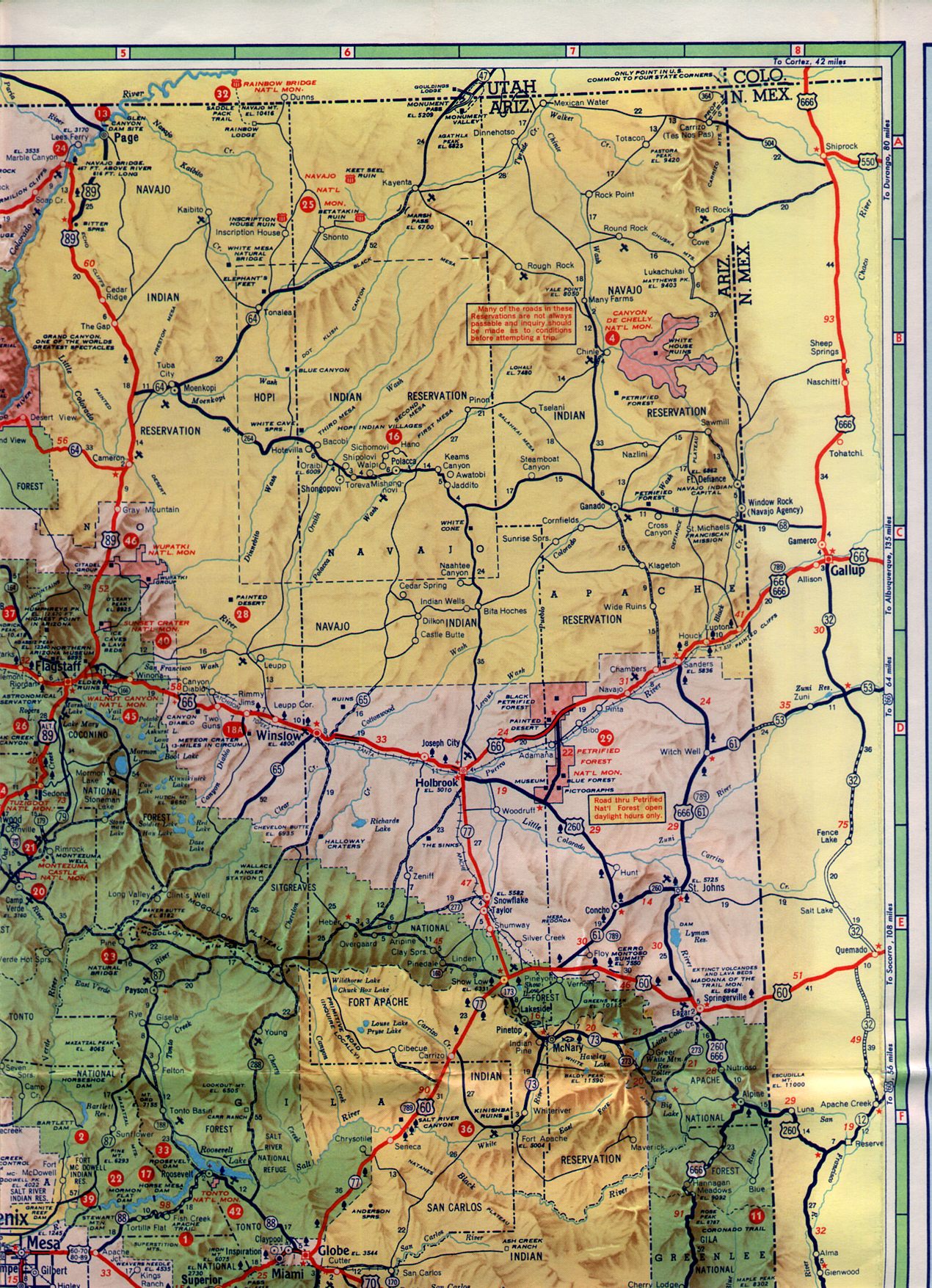
According to Arizonaroads.com the route of AZ 188 from AZ 88 at Roosevelt Dam north to Payson was designated in 1958.  At the time the junction of AZ 88 and AZ 188 was at Roosevelt Dam.   AZ 188 can be viewed in it's originally configuration crossing Roosevelt Dam on the 1961 State Highway Map.


In 1989 an expansion project to raise Roosevelt Dam from 280 feet to 357 began.  Said project was to expand Roosevelt Dam via use of a new masonry cover over the original dam structure.  The Roosevelt Dam expansion project required AZ 188 be shifted onto a new bridge over Roosevelt Lake.  The new Roosevelt Lake Arch bridge was completed by 1992 and remains one of the more scenic bridges in Arizona. 


According to Arizonaroads.com AZ 188 was shifted over what was AZ 88 east of Roosevelt Dam to Globe by 2000.  The change was apparently instigated due to a new ADOT policy about having a highway have both terminus points at the same route.  


Comments

Popular posts from this blog

Grand Loop Road of Yellowstone National Park

  Grand Loop Road is a 140 mile loop highway which traverses the interior of Yellowstone National Park.  Grand Loop Road connects all of the major attractions and geological features of Yellowstone National Park along with the entrance roads.  Grand Loop Road is a seasonal highway and despite some conjecture never has been part of the US Route System.   Part 1; the history of Grand Loop Road The majority of history pertaining to Grand Loop Road was taken from the below National Park Service article: Historic Roads - Yellowstone National Park (U.S. National Park Service) (nps.gov) Yellowstone was declared the first National Park of the United States on March 1st, 1872.  The first real highway to access Yellowstone National Park came in 1873 when a tolled facility was constructed from Bozeman, Montana via Yankee Jim Canyon to Mammoth Hot Springs.  Numerous attempts were made to fund construction of roadway infrastructure during the early years of Yellows...

The last 1956-63 era California Sign State Route Spade?

Along southbound California State Route 170 (the Hollywood Freeway Extension) approaching the Hollywood Freeway/Ventura Freeway interchange a white California State Route 134 Sign State Route Spade can be observed on guide sign.  These white spades were specifically used during the 1956-63 era and have become increasingly rare.  This blog is intended to serve as a brief history of the Sign State Route Spade.  We also ask you as the reader, is this last 1956-63 era Sign State Route Spade or do you know of others?  Part 1; the history of the California Sign State Route Spade Prior to the Sign State Route System, the US Route System and the Auto Trails were the only highways in California signed with reassurance markers.  The creation of the US Route System by the American Association of State Highway Officials during November 1926 brought a system of standardized reassurance shields to major highways in California.  Early efforts to create a Sign State Route ...

California State Route 70; the Feather River Highway

From 2017 through to early 2019 I drove the majority of the California State Route 70; the Feather River Highway from CA 89 southwest to CA 99. CA 70 is an approximately 178.5 mile state highway which starts at US 395 near the Nevada State Line and travels west through the Feather River Canyon to CA 99.  CA 70 is often referred to as the Feather River Highway" given it's close association with the river.  Historically CA 70 was previously signed as US 40A and CA 24.  The Legislative Routes prior to the 1964 California Highway Renumbering that made up the current route of CA 70 are as follows: -  Legislative Route Number 21 from US 395 westward to Oroville. -  LRN 87 from Oroville south to Marysville. -  LRN 232 from Marysville to the current junction with CA 99.  CA 70 was even dual signed with CA 99 into Sacramento on what was LRN 232 for a time. The change from US 40A/LRN 21/LRN 87/LRN 232 can be seen by comparing the 1963 State Highway Ma...