Mount Orne Covered Bridge - New Hampshire and Vermont


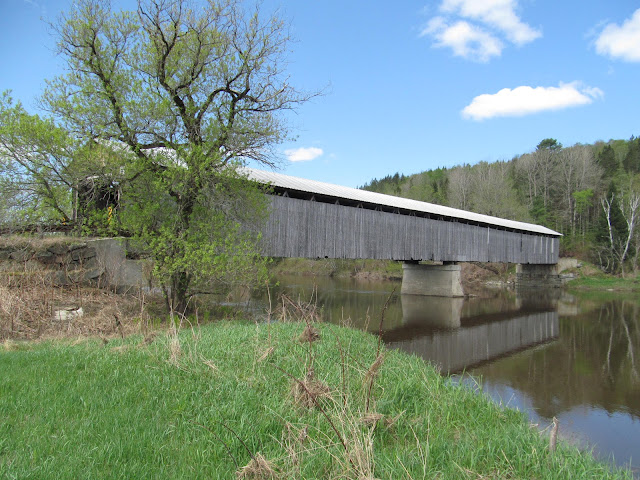
The Mount Orne Covered Bridge is a 266 foot long covered bridge spanning over the Connecticut River, connecting Lancaster, New Hampshire with Lunenburg, Vermont. The bridge is listed in the World Guide of Covered Bridges, Numbers 45-05-03 / 29-04-08, and is also New Hampshire Covered Bridge #30 in New Hampshire's inventory of covered bridges. Replacing a toll bridge that was destroyed by a log jam in 1908, the Mount Orne Covered Bridge was built in 1911 using a Howe through truss design. The towns of Lancaster and Lunenburg each contributed $2,500 towards the construction of the covered bridge, with the remaining $1,678 of the cost having been raised by subscription. The pine timber that was used for the bridge was precut and was assembled on site.

As is the case with many covered bridges, the Mount Orne Covered Bridge has taken a beating towards its longevity over the years. In 1969, a truck loaded with salt dropped through the bridge deck and landed on the ice below. The front of the truck became hooked on one of the bridge's steel rods while the truck's rear rested on the ice. The salt from the truck spilled onto the ice and threatened to melt the ice that held the salt truck from breaking through. The truck was raised, was disengaged from the bridge, and lowered to the ice. The truck was quickly dragged away from the area weakened by the salt, was turned upright and was loaded onto a flatbed on the Vermont side of the river. Additional damage to the covered bridge by tractor trailers took place in 2006, 2010 and 2012.

The covered bridge was closed on July 5, 1983 for twelve weeks for rehabilitation at a cost of $133,000. Funding came from the towns of Lancaster and Lunenburg, the states of New Hampshire and Vermont, along with matching grant a federal Historic Preservation Fund matching grant from the National Park Service of the U.S. Department of the Interior through the New Hampshire Division of Historical Resources. The bridge was rededicated on November 23, 1983. The Mount Orne Covered Bridge is also listed on the National Register of Historic Places.
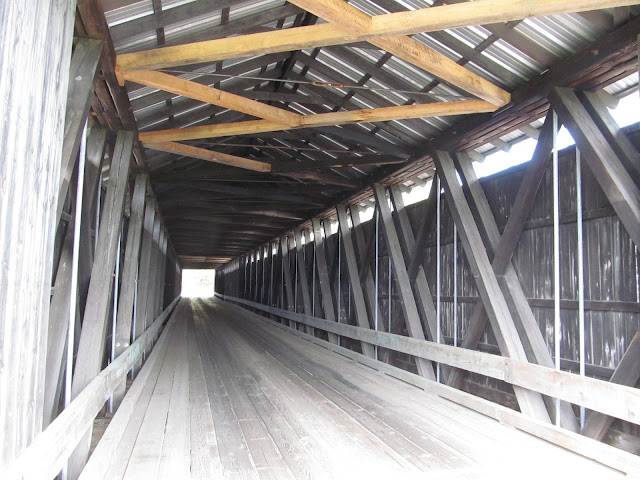
Inside the covered bridge.

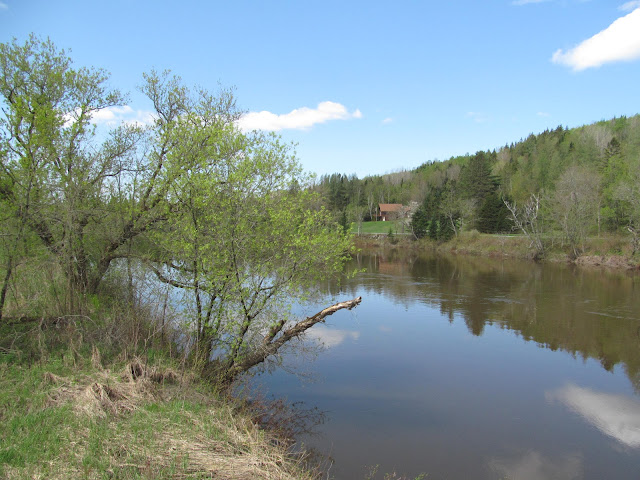
A view of the Connecticut River on a nice spring day.

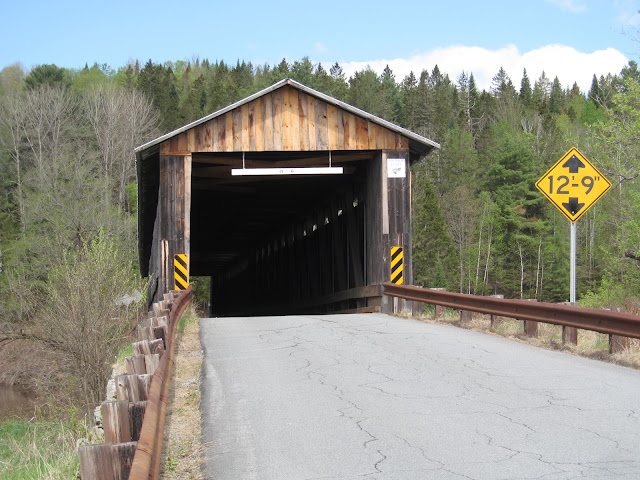
A view of the eastern bridge portal on the New Hampshire side of the bridge.

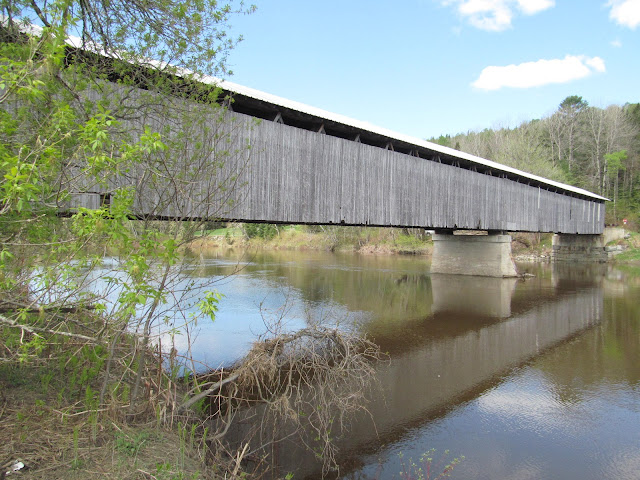
Side profile of the covered bridge.

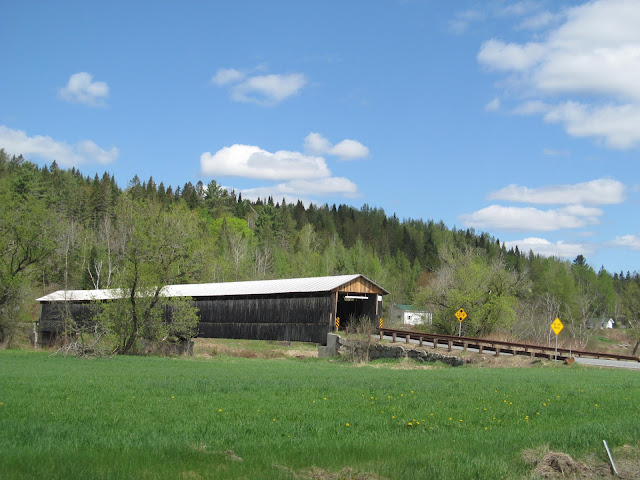
Coming up towards the covered bridge on NH 135.


How to Get There:


Sources and Links:
New Hampshire Bridges - Mt. Orne Bridge
Vermont Covered Bridge Society - The Mount Orne Covered Bridge
Bridgehunter.com - Mt. Orne Covered Bridge 45-05-03 / 29-04-08
NH Tour Guide - Mt. Orne Covered Bridge Lancaster NH and Lunenburg VT

Comments

Popular posts from this blog

Did Caltrans just kill the G26 cutout US Route shields?

The US Route System was formally created by the American Association of State Highway Officials during November 1926.  Through the history of the system the only state to which has elected to maintain cutout US Route shields has been California.  The G26 series cutout US Route shields have become a favorite in the road enthusiast hobby and are generally considered to be much more visually pleasing than the standard Federal Highway Administration variant.  However, the G26 shield series appears to have been killed off on January 18, 2026, when Caltrans updated their Manual of Uniform Traffic Control Devices.  This blog will examine the history of the US Route shield specifications in California and what is happening with the 2026 changes.  The blog cover photo is facing towards the terminus of California State Route 136 and at a G26-2 specification US Route 395 shield.  In the background Mount Whitney can be seen in the Sierra Nevada range.   ...

May 2023 Ontario Trip (Part 3 of 3)

  Over the years, I have made plenty of trips to Ontario, crisscrossing the southern, central and eastern parts of the province. Living in Upstate New York, it's pretty easy to visit our neighbor to the north, or is that our neighbor to the west? Ottawa is one of my favorite cities to visit anywhere in the world, plus I've discovered the charm of Kingston, the waterfalls of Hamilton (which is on the same Niagara Escarpment that brings us Niagara Falls), the sheer beauty of the Bruce Peninsula, and more. But I hadn't explored much of Cottage Country. So I decided to change that, and what better time to go than over Memorial Day weekend, when the daylight is long and I have an extra day to explore. On the third and final day of my trip, I started in Huntsville and made my way through Muskoka District and Haliburton County, passing by many lakes along the way. I stopped in towns such as Dorset, Haliburton and Bancroft before making a beeline down to Belleville and then over th...

Ghost Town Tuesday; Nichols, FL

A couple years ago I spent a lot of spare time exploring phosphate mining ghost towns in the Bone Valley of Polk County, Florida.  One ghost town in particular called Nichols on Polk County Route 676 west of Mulberry caught my eye due to a relative lack of documentation on ghosttowns.com. Nichols was created in 1905 during the early phosphate mining boom in the Bone Valley region.  For the time Nichols was unusual since it had company housing in the Nichols Mine site and private residences outside the gate.  Nichols is only about two miles west of Mulberry which probably made it a somewhat reasonable commute even by the wonky standards of the early 20th Century.  Most of the Bone Valley region was relatively remote which made commuting or homesteading impractical which is why there are so many ghost towns in the area.  The company housing section of Nichols was phased out and abandoned by 1950. The Nichols town site is largely abandoned and could "possibl...